UE/R: SOCO PROJECT FACILITATORS URGED TO WORK HARD FOR THE SUCCESS OF THE PROJECT – DCE NABDAM
By – Prosper Adankai
The history of GBC URA Radio in Bolgatanga is closely linked to one of Ghana’s most ambitious agricultural development initiatives of the 1970s and 1980s: the Upper Region Agricultural Development Project (URADEP).
Although the project failed to achieve its projected increases in crop and livestock production, its legacy extended beyond its immediate agricultural targets
It helped shift government policy towards smallholder farmers, promoted the decentralisation of agricultural services and established institutions intended to bring essential services closer to farming communities
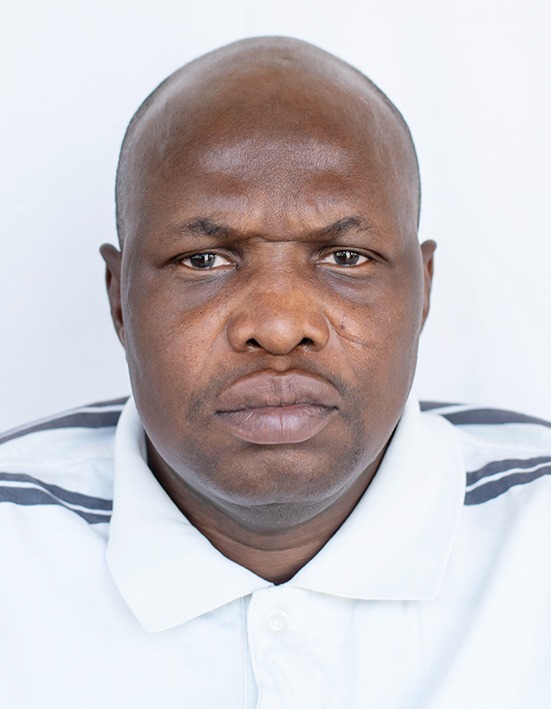
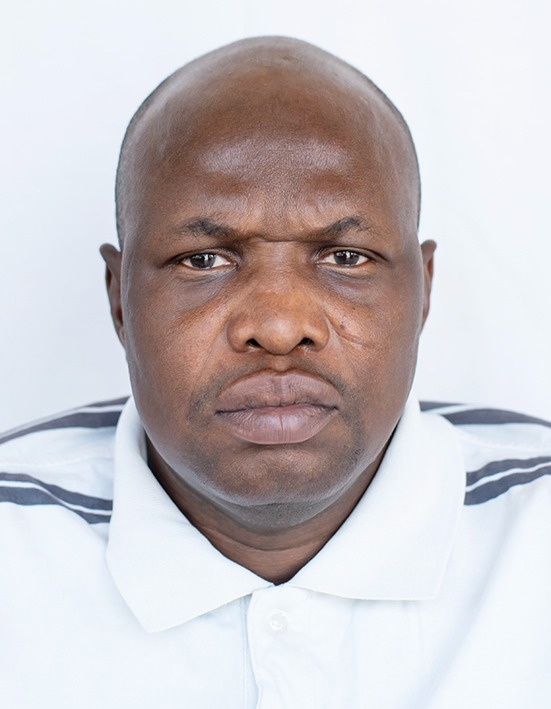
For the Executive Director of the Forum for Natural Regeneration (FONAR), Sumaila Seidio Saaka, these lessons remain relevant as Ghana searches for effective ways to strengthen agricultural extension, improve access to farm inputs and promote sustainable land management
He believes URA Radio, which emerged from the project’s agricultural communication agenda, continues to have an important role in connecting farmers with practical knowledge on agriculture, environmental conservation and rural development
“URA Radio has been the beacon of development communication in northern Ghana, particularly the Upper East and Upper West regions,” he said
His remarks draw attention to a broader question: how can the institutions and communication systems established under URADEP inform present-day efforts to support farmers?
The World Bank’s Project Completion Report on the Upper Region Agricultural Development Project, published in May 1987, describes URADEP as the Bank’s first broad-based area development project financed in Ghana
The Bank approved a loan of US$21 million in June 1976 for the project, which became effective in April 1977 and closed in September 1984, following two extensions totalling 21 months
URADEP covered the then Upper Region, an area of approximately 27,300 square kilometres with an estimated 125,000 farming families
Its objectives included increasing the production of food crops, cotton and livestock, improving access to agricultural inputs, strengthening extension and animal health services, developing small-scale irrigation infrastructure and supporting nutrition, health and rural water supply
The project represented a significant change in agricultural policy. Rather than concentrating primarily on state-led production schemes and support for larger farmers, the initiative placed greater emphasis on smallholder farmers and the decentralisation of agricultural services
That policy shift remains one of the project’s most important contributions, even though its production ambitions were not fully realised
URADEP was implemented during a period of considerable political change and economic decline in Ghana
The World Bank’s completion report identified management difficulties, shortages of agricultural inputs and raw materials, inconsistent government support and weaknesses in project implementation among the factors that affected its performance
The project also faced challenges in coordinating the various institutions responsible for agricultural production, input supply and other services
Its original targets were ambitious, and delays affected several infrastructure components. The broadcasting facility in Bolgatanga, for example, experienced difficulties involving construction, equipment installation and technical commissioning
The project’s evaluation found that, although it achieved policy and institutional gains, it did not demonstrate a significant impact on crop and livestock production. The estimated economic rate of return was below 10 per cent
These findings are important because they caution against treating URADEP as an unqualified success. Its history instead offers a more complex lesson: strong development objectives and substantial investment are not enough without realistic planning, capable management, reliable supplies and consistent policy support
One of URADEP’s major institutional innovations was the establishment of the Farmers Services Company, known as FASCOM
The company was intended to improve farmers’ access to fertiliser, seeds, chemicals, tools, machinery hire services and produce storage and marketing facilities
It was also designed to create opportunities for farmers to build an ownership stake in the company over time
The project supported a network of Farm Service Centres intended to bring agricultural services closer to farming communities. Mr Saaka recalled that the network included about 96 centres, while the World Bank’s original project design had provided for 90 Farm Service Centres
The distinction between the planned target and the network later recalled by the interviewee is important when documenting the project’s history
The completion report also describes the role of farmer participation in managing the centres. By 1983, each centre reportedly had a nine-member committee selected by farmers to help distribute inputs and reduce allegations of favouritism
These committees also organised communal labour for centre construction and operated a grain-purchase scheme intended to support farmers during the lean season
For Mr Saaka, the experience illustrates the value of linking agricultural inputs with local participation and farmer education
He expressed concern that FASCOM was no longer operating as originally envisaged, arguing that the loss of an institution designed to coordinate farmer services weakened the integrated support system that URADEP sought to establish
The broader lesson is not simply that an old institution should be restored in its former form. Rather, policymakers could examine what worked, what failed and whether a modern farmer-service system could address current needs more effectively
Communication was a central component of URADEP’s original design
The World Bank report identifies the expansion of radio broadcasting as part of the project’s farm development activities. The plan included an FM network and the distribution of transistor radios to encourage farmers to participate in the programme and receive agricultural information
The Bolgatanga station was planned as the main broadcasting facility, with a substation at Han intended to extend the service’s reach
The project faced delays in completing the broadcasting infrastructure. When the completion report was prepared, the main station building had been completed, but its equipment had not yet been commissioned
Technical assistance was subsequently arranged to complete the installation and make the station operational
Historical accounts identify the station’s commissioning with the period around late 1986, followed by its transition into GBC’s broadcasting operations
Mr Saaka said the station was established to communicate agricultural information and explain development interventions to farming communities. He also recalled that personnel received training in communicating agricultural information, in addition to conventional journalism and news reporting
He noted that URA Radio’s local-language programming enables the station to reach people who may not understand English and can help make agricultural and environmental information more accessible
Although the regional broadcasting landscape has expanded with the emergence of private radio stations, he believes URA Radio retains an important public-service role because of its history, reach and experience in development communication
Another important component of URADEP was the Institute for Field Communication and Agricultural Training (IFCAT), which was established to strengthen agricultural extension communication and training
The World Bank report records collaboration with the International Agricultural Centre in Wageningen, the Netherlands, and support from the Netherlands Government
The associated Training in Rural Extension for National Development initiative became operational in December 1977 and ran until 1983
The institute was intended to help prepare personnel to communicate agricultural information and support extension activities
An evaluation cited in the completion report found that IFCAT had the capacity to serve the training needs of government and non-government personnel in extension communication in Upper and Northern Ghana
However, the evaluation also noted that the institute’s impact on farmers’ living standards was limited and that its future depended on clear institutional status, appropriate funding and effective management
These findings reinforce the need to connect agricultural training with practical services, resources and support for farmers
Mr Saaka identified the former institute’s location at Navrongo with the present-day University of Technology and Applied Sciences campus
That historical identification should be confirmed against institutional records as part of any further documentation of IFCAT’s legacy
URADEP’s experience extended beyond radio, FASCOM and agricultural training
The project supported animal health services, including cattle vaccination and the treatment of sheep and goats
The completion report records that veterinary targets were met and that a 1983 pilot intervention against Newcastle disease in village poultry reported an 85 per cent success rate
Small-scale irrigation and dam construction were also important components. Communities valued the dams for dry-season gardening, livestock watering and other uses
The project was also credited with helping onion growers around Bawku reach markets outside the region
However, implementation fell considerably short of the original infrastructure targets
The report records that only a limited portion of the planned dam construction and rehabilitation work had been completed by the project’s end
The experience points to the importance of setting achievable targets, providing appropriate equipment and technical supervision, and ensuring that infrastructure plans reflect the resources and management capacity available
The World Bank’s broader lessons included keeping project design simple, involving implementing agencies in planning, improving the conditions and support available to field staff, and maintaining an effective dialogue on agricultural policy and pricing
These lessons remain relevant to current agricultural interventions that seek to coordinate extension, input supply, irrigation, training and market access
Mr Saaka believes GBC URA Radio can help carry forward the development communication vision associated with URADEP by making practical agricultural and environmental information a sustained part of its programming
He expressed interest in working with the station through FONAR to reach more farmers with information on natural resource management, land restoration and sustainable agricultural practices
Potential areas for collaboration include soil fertility management, farmer-managed natural regeneration, bushfire prevention, water conservation, climate-resilient farming and the protection of productive land
Such collaboration could connect the station with agricultural extension officers, researchers, farmers’ groups, traditional authorities, civil society organisations and relevant government agencies
Rather than limiting agricultural communication to occasional broadcasts, a coordinated programme could combine regular radio discussions, farmer interviews, expert explanations, local-language features and follow-up reporting on the challenges farmers face
The approach would reflect one of URADEP’s original principles: communication works best when it is connected to the institutions, services and practical knowledge that farmers need
URADEP’s record is neither one of complete success nor one of total failure
Its production targets were not achieved, and its implementation was undermined by economic pressures, management problems and inconsistent support
Yet it helped shift agricultural policy towards smallholder farmers, advanced the decentralisation of agricultural services and established institutional approaches that continue to offer lessons
For Mr Saaka, URA Radio is an important part of that legacy because it represents the role of communication in connecting development programmes with the people they are intended to serve
As Ghana pursues stronger food production, improved rural livelihoods and sustainable land management, revisiting URADEP’s experience could help policymakers and development organisations identify what should be retained, what needs reform and what should not be repeated
The task is not necessarily to recreate the programme exactly as it existed decades ago
It is to adapt its useful lessons to present-day conditions and ensure that farmers can access reliable inputs, effective extension services, practical training and relevant information
In that effort, GBC URA Radio can remain more than a broadcaster
It can continue to serve as a bridge between agricultural knowledge and farming communities—helping preserve the most valuable part of URADEP’s legacy while supporting the next chapter of agricultural development in Northern Ghana
Source – gbcuraonline.com