UE/R: SOCO PROJECT FACILITATORS URGED TO WORK HARD FOR THE SUCCESS OF THE PROJECT – DCE NABDAM
By – Abagna Jose Nelson
There is no shortage of football talent in the Upper East Region. Walk through any community football park and you will find young boys and girls chasing the same dream of becoming footballers and making something meaningful out of their talent.
For the girls, however, the journey is often much more difficult.
Women’s football in the region has produced talented players, yet the game continues to operate with limited resources, inadequate competition and very little attention compared to the men’s game.
Clubs and individuals working at the grassroots are often left to do almost everything on their own with no support coming from anywhere.
That situation cannot continue if we genuinely want to develop women’s football in the region.
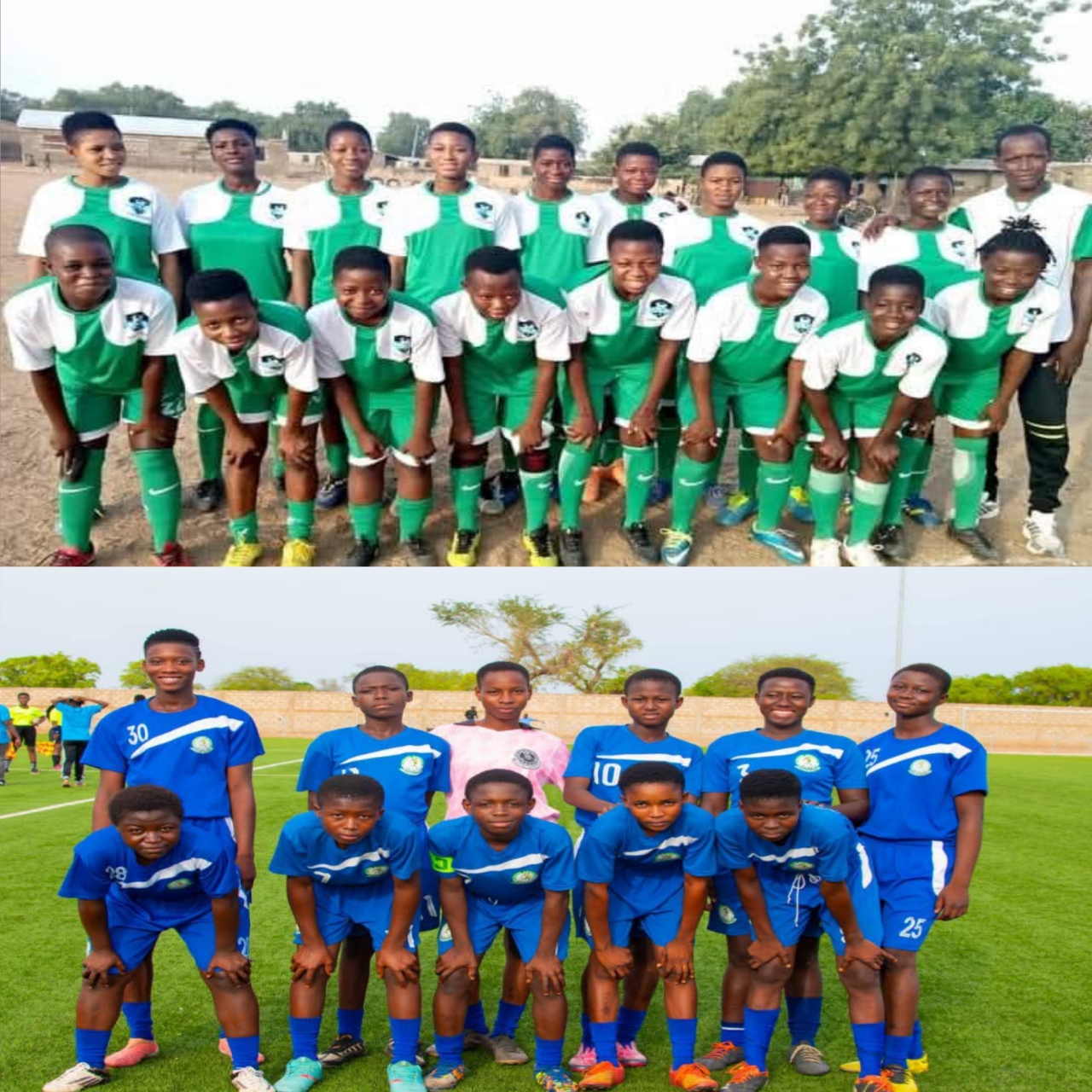
Few teams such as Bolga All Stars Ladies, Bolga Sharp Arrows Ladies, Builsa Ladies and Paga Ladies have demonstrated that the region has the talent. These clubs have provided platforms for young girls to develop their skills and, in some cases, move on to opportunities outside the region and even outside Ghana.
It is clear that the question, is no longer whether the talent exists.but rather whether we are prepared to invest in it.
UPPER EAST REGION HAVE THE TALENT, BUT THE SUPPORT IS NOT THERE
For people like, Osei Bukari, the CEO of Builsa Ladies, the challenge is one he has experienced firsthand.
“There are a lot of talents in our region, but the support is not there,” he said.
According to him, that reality motivated him to establish Builsa Ladies as a platform where young girls can have an opportunity to develop and showcase their God-given talent.
“It is the reason, in my own small ways, I have formed this team to help give hope and opportunities to these girls to showcase their God-given talent,” he explained.
His satisfaction has been heightened by the progress of his players. He is particularly proud that one of the girls from his team, Madagline Awuni, earned a place in Ghana’s National Female U20 team that participated in the African U20 Women’s Championship in Morocco in 2024.
That achievement should not be viewed simply as the success of Magdalene or one club. It is an indication of what can happen when young girls are given an opportunity to play, develop and be noticed.
But sadly how many Magdalene’s are out there yet to be discovered?
SOMETIMES, ENCOURAGEMENT IS ALL A PLAYER NEEDS
The story of former Black Queens striker Jane Ayieyam provides another important lesson.
Jane has previously spoken about the encouragement she received from her former coach, Amin Sofo, during her days with Bolga Ghatel Ladies. That encouragement helped keep her in football at a time when she could easily have walked away from the game.
Today, she is a former Black Queens player and gainfully employed by the Ghana Police Service,who reached the highest level of the football in Ghana, the Black Queens.
It is worth imagining what might have happened if there had been nobody to encourage her from the beginning.
This is why the conversation about women’s football must go beyond money. Investment is important, but so is encouragement.
A young girl needs a coach who believes in her. She needs parents who will allow her to play. She needs teammates who will support her and a community that will not make her feel that football is something she should be ashamed of pursuing.
There are undoubtedly girls across the Upper East Region who have the ability to go far in football but have already stopped playing because they did not receive the support they needed.
That is a loss not only to the girls themselves, but to the region and Ghanaian football as a whole.
WE NEED TO CHANGE HOW WE SEE WOMEN’S FOOTBALL IN THE REGION
For generations, football has often been treated as a man’s game. While attitudes are changing, some girls still face resistance when they decide to take football seriously.
Parents may worry about their education. Communities may question whether football is appropriate for girls. Some people still see women’s football as less important or less commercially valuable than the men’s game.
These attitudes need to change.
A girl who dreams of becoming a footballer deserves the same encouragement as a boy with the same dream.
Parents, coaches, teachers, traditional leaders, football administrators, businesses and the media all have a role to play.
We should be creating an environment where a young girl can say, “I want to play football,” and hear, “Go ahead, we believe in you.” it’s the motivation many of these girls needs when they are starting the game.
INVESTMENT DOES NOT ALWAYS HAVE TO BE MILLIONS OF CEDIS
One of the biggest misconceptions about supporting women’s football is that meaningful investment must involve huge sums of money.
No. It is not always the case.
For a young player, a pair of football boots, socks, shinguards can make a huge difference.
For a club, transportation to an away match can determine whether the team travels or forfeits a game.
For another club, proper training equipment like cones, balls, training gears can improve the quality of preparation.
A company can sponsor a local women’s tournament. A businessman can provide kits. A philanthropist can support the medical needs of players. A school can give talented footballers the flexibility to combine education and sport.
These may appear to be small interventions, but collectively they can transform women’s football.
What is needed is a deliberate commitment from the private sector, football administrators, local businesses, philanthropists and development organisations to see women’s football as an investment rather than charity.
FOOTBALL CAN OPEN DOORS BEYOND THE PITCH
The benefits of women’s football also go beyond what happens on the pitch.
Players such as Ladi Issaka, Rachel Atia and Abambila Esther are examples of young women from the region who have, through football, gained opportunities to pursue educational programmes in the United States.
Their stories are particularly important because they demonstrate that football does not necessarily have to end with a professional playing career.
For some girls, football can provide access to education. For others, it can provide international exposure, scholarships, professional networks and opportunities they may never otherwise have encountered.
A girl playing football on a community pitch in Bolgatanga, Sandema, Paga, Navrongo or Bawku could be one opportunity away from changing the direction of her life and intact the lives of her family and entire community.
That is why we must take grassroots women’s football seriously as a region.
THE MEDIA MUST SUPPORT WOMEN’S FOOTBALL
The media has an important role in this conversation.
Women’s football should not only receive attention when a player is selected for the national team.
There are stories worth telling at the grassroots. There are coaches sacrificing their time and resources. There are clubs struggling to survive. There are young players showing remarkable potential.
These stories deserve coverage and much publicity.
When a young girl sees another girl from her community being celebrated for her football achievements, it gives her something powerful: a sense that she too can make it.
WE ARE NOT ONLY DEVELOPING FOOTBALLERS
Perhaps the most important reason to invest in women’s football is that we are not simply developing footballers.
We are developing young women.
Football teaches discipline, teamwork, leadership, confidence and resilience. It can also introduce girls to careers beyond playing, including coaching, refereeing, sports journalism, administration, physiotherapy, sports medicine and other areas of the sports industry.
A strong women’s football system can therefore contribute to the broader development of young women in the Upper East Region.
That is a conversation worth having.
THERE ARE MANY MORE JANE AYIEYAMS OUT THERE
Jane Ayieyam’s story should make us ask difficult questions.
How many talented girls are currently playing on community pitches across the Upper East Region?
How many could go on to represent Ghana?
How many could earn scholarships or educational opportunities through football?
How many have already stopped playing because nobody believed in them?
We may never know.
But we do know that the next generation is already here.
They are playing on dusty community pitches. They are training with inadequate equipment. Some are travelling long distances for matches. Some are balancing football with school. Others are trying to convince their families that football is worth pursuing.
They need people to believe in them.
They need clubs that can support them.
They need competitions that will test them.
They need sponsors who are willing to invest in them.
And they need a football system that gives them a pathway from the grassroots to the regional, national and international levels.
THE TIME TO ACT IS NOW
The Upper East Region has already demonstrated that it can produce exceptional female footballers.
The work being done by clubs such as Bolga All Stars Ladies, Bolga Sharp Arrows Ladies, Builsa Ladies, Kuakua Ladies and Paga Ladies deserves greater recognition and support.
But the responsibility cannot be left to these clubs alone.
If we want more players like Jane Ayieyam, Awuni Magdalene, Azumah Bugri to emerge and more girls like Ladi Issaka, Rachel Atia and Abambila Esther to use football as a pathway to education and other opportunities, then we must invest in the system that produces them.
The talent has never been the problem.
The real challenge has always been creating the right environment for that talent to flourish.
It is time for the Upper East Region to take women’s football seriously and it must start now.
Story by, Abagna Jose Nelson
Head of Sports
GBC Ura Radio.
Source : gbcuraonline.com