UE/R: SOCO PROJECT FACILITATORS URGED TO WORK HARD FOR THE SUCCESS OF THE PROJECT – DCE NABDAM
By – Gladys Apuweni
A community led initiative spearheaded by WaterAid is empowering residents in 75 communities across Ghana’s White Volta Basin to monitor and protect groundwater resources amid growing threats from climate change, unpredictable rainfall patterns and prolonged dry spells
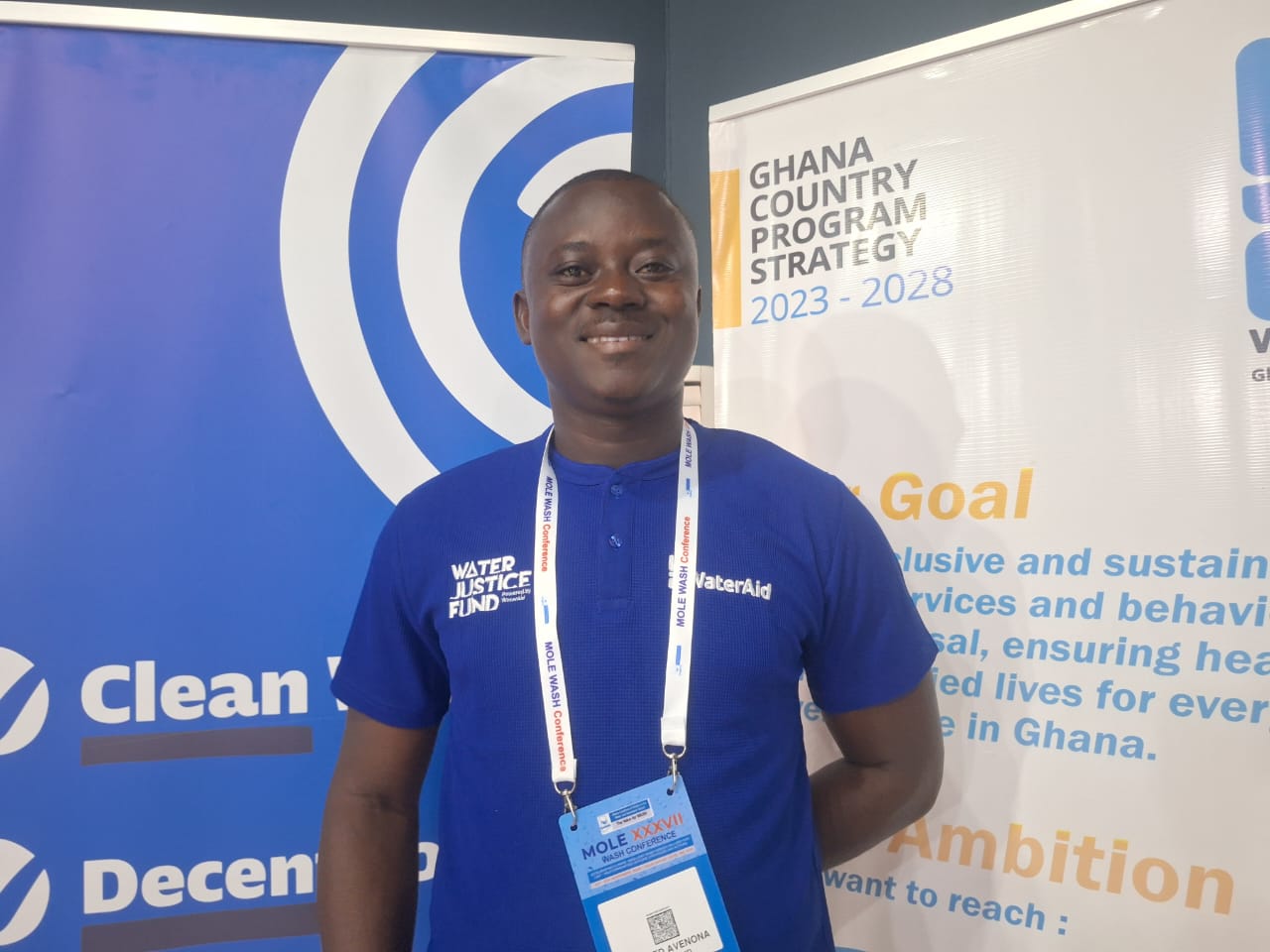
The initiative, dubbed Citizen Science and Groundwater Monitoring for Climate Resilient WASH Services in Ghana’s White Volta Basin, was presented at the ongoing 37th Mole Conference at Aqua Safari in Ada by Alfred Avenona, Project Coordinator, and Ing. Richard Ntibrey, Programme Manager
The project seeks to address growing concerns over groundwater depletion, unreliable water supply and the increasing impact of climate change on water resources, particularly in rural communities where groundwater remains a major source of water for domestic and livelihood activities
According to the presenters, approximately 95 per cent of rural water supply systems in Ghana depend on groundwater, while it serves as the principal source of water for up to 80 per cent of the population within the White Volta Basin. However, rising temperatures, erratic rainfall patterns, prolonged dry spells and inadequate groundwater monitoring systems continue to threaten the sustainability of these resources
Through the citizen science approach, community members, particularly Water Resource Management Committee (WRMC) members, are being trained and equipped to monitor groundwater levels, record rainfall patterns, observe changes in water sources and report water quality concerns
The data collected by community members are subsequently validated by the Water Resources Commission (WRC) to support evidence based planning, resource management and decision making
The initiative currently covers 75 communities across five districts and municipalities in the Upper East Region, Bawku West, Nabdam, Bongo, Kassena Nankana West and Kassena Nankana Municipal
So far, 150 Water Resource Management Committee members have been trained, while 75 rainfall gauges, groundwater monitoring facilities and five water quality testing kits have been deployed to strengthen community level monitoring.
Water quality assessments conducted at 21 sampling points revealed that groundwater quality was generally satisfactory, with 95 per cent compliance recorded for pH, electrical conductivity and total dissolved solids
However, turbidity emerged as a significant concern, with 15 of the 21 sampling sites, representing 71 per cent, recording levels above the recommended guideline. One of the monitoring locations, identified as Gia 2, was particularly flagged for elevated electrical conductivity, dissolved solids and salinity levels
The findings have highlighted the need for targeted interventions, including the protection of groundwater recharge areas, restoration of vegetation cover, improved land use practices and the development of community groundwater management plans to ensure a sustainable balance between water abstraction and replenishment
The presenters further highlighted efforts to address existing gaps in groundwater governance through the development of a monitoring framework, stakeholder consultations and a rapid assessment to ensure that women’s perspectives are incorporated into the proposed framework
They stressed that communities must not be viewed merely as beneficiaries of groundwater management but as active contributors and producers of the evidence needed to protect and sustain water resources
According to them, empowering residents with the knowledge and tools to generate, interpret and utilise local environmental data is essential to strengthening accountability, improving water resource management and building climate resilient water systems
The presentation was delivered under the conference sub theme, Inclusive Service Delivery Options and Innovations for Last Mile Communities, highlighting citizen science as an innovative approach to promoting sustainable groundwater management and strengthening climate resilient water, sanitation and hygiene (WASH) services
Source – gbcuraonline.com