UE/R: SOCO PROJECT FACILITATORS URGED TO WORK HARD FOR THE SUCCESS OF THE PROJECT – DCE NABDAM
By – Gladys Apuweni
The National President of the Conference of Directors of Education (CODE), Mr Ibrahim Mumuni, has called for urgent investment in supervisory vehicles, adequate staffing, improved welfare conditions and learning resources to strengthen district level education management and improve learning outcomes in Ghana
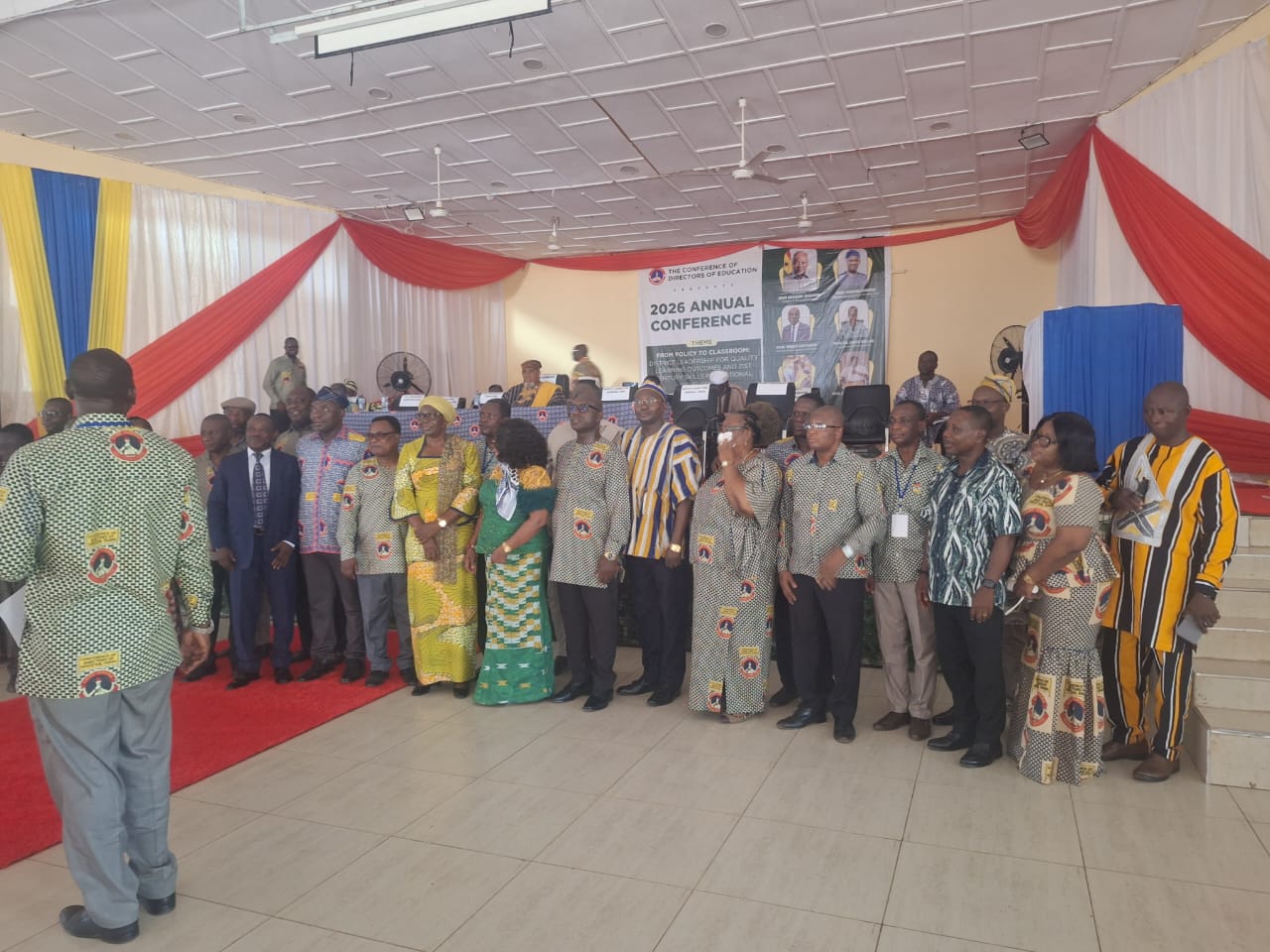
He made the call on Tuesday, October 20, 2026, during the annual National Conference of Directors of Education held in Bolgatanga in the Upper East Region, where he highlighted persistent challenges confronting education directors in the discharge of their responsibilities
Speaking on the conference theme, “From Policy to Classroom: District Leadership for Quality Learning Outcomes and 21st Century Skills for National Development,” Mr Mumuni stressed that the success of education policies should be measured by their impact in the classroom rather than by the quality of policy documents alone.
According to him, education directors are strategic leaders whose decisions directly influence teacher performance, effective supervision, resource management and the quality of education delivered to learners
He noted that despite the importance of their responsibilities, many directors continue to face serious logistical and administrative constraints that undermine effective supervision and monitoring of schools across their respective districts
Mr Mumuni identified the poor condition of directors’ vehicles and circuit supervisors’ motorbikes as major challenges, explaining that the ageing vehicles were increasingly unsafe and inadequate for monitoring schools, particularly in rural and hard to reach communities
“How do we supervise over 100 schools without good mobility?” he questioned, emphasising that effective supervision cannot be achieved without the necessary logistical support
He therefore called on the government and relevant education authorities to prioritise the provision of reliable vehicles and motorbikes to enable education managers to carry out regular school visits and improve teaching and learning
On staffing and welfare, the CODE president expressed concern about shortages of essential personnel in education directorates, including drivers, security officers, procurement officers and planning staff
He explained that the implementation of the government’s workforce initiatives had increased the need for personnel with the appropriate technical expertise, particularly in procurement and planning, to ensure effective administration and accountability.
Mr Mumuni also raised concerns about the remuneration of drivers within the Ghana Education Service (GES), describing their conditions as demotivating. He disclosed that some newly recruited personnel had reportedly declined appointments after learning about the remuneration attached to the positions
He appealed to the authorities to review the conditions of service of such workers to attract and retain qualified personnel within the education system
The CODE president further called for structured capacity building programmes for education directors and other managers, noting that professional development was essential to equip them with the knowledge and skills required to respond to the changing demands of education management.
He also highlighted persistent gaps in the availability of textbooks and other teaching and learning materials required for the implementation of the standard based curriculum
Mr Mumuni urged the authorities to address these shortages to ensure that teachers and learners had the resources needed to achieve the expected educational outcomes
Touching on infrastructure, he commended efforts to provide furniture to senior high schools through the local government structure but stressed that more needed to be done to ensure that every learner had access to a conducive learning environment
Quoting former South African President Nelson Mandela, he said education remained a powerful tool for transforming societies but questioned how effectively children could learn when some were still compelled to sit on classroom floors
He emphasised that the challenges facing education management required stronger collaboration among the Ghana Education Service, metropolitan, municipal and district assemblies, traditional authorities, parents, communities and development partners
Mr Mumuni also appealed for a review of the capped Category Four allowances for education directors, arguing that changing economic conditions had affected the adequacy of the allowances and, consequently, staff motivation
He further raised concerns about coordination and role conflicts between district education authorities and metropolitan, municipal and district assemblies, calling for improved collaboration and clearer responsibilities to enhance the delivery of education services
Welcoming participants to the Upper East Region, he commended the leadership of CODE for selecting Bolgatanga to host the conference and assured delegates of the hospitality of the chiefs and people of the region
He described education as a critical pathway to poverty reduction, equality and national development, stressing the need to ensure that every child, regardless of geographical location or personal circumstances, had an equal opportunity to access quality education
Mr Mumuni urged education stakeholders to translate policies into practical classroom improvements, insisting that effective district leadership, motivated personnel, adequate resources and accountable management were indispensable to achieving quality learning outcomes and equipping learners with the skills needed for national development
Source – gbcuraonline.com