UE/R: SOCO PROJECT FACILITATORS URGED TO WORK HARD FOR THE SUCCESS OF THE PROJECT – DCE NABDAM
By – Prosper Adaakai
Media practitioners in the Upper East Region have been sensitised on the dangers of Striga and ways of controlling the parasitic weed that affects cereal crops
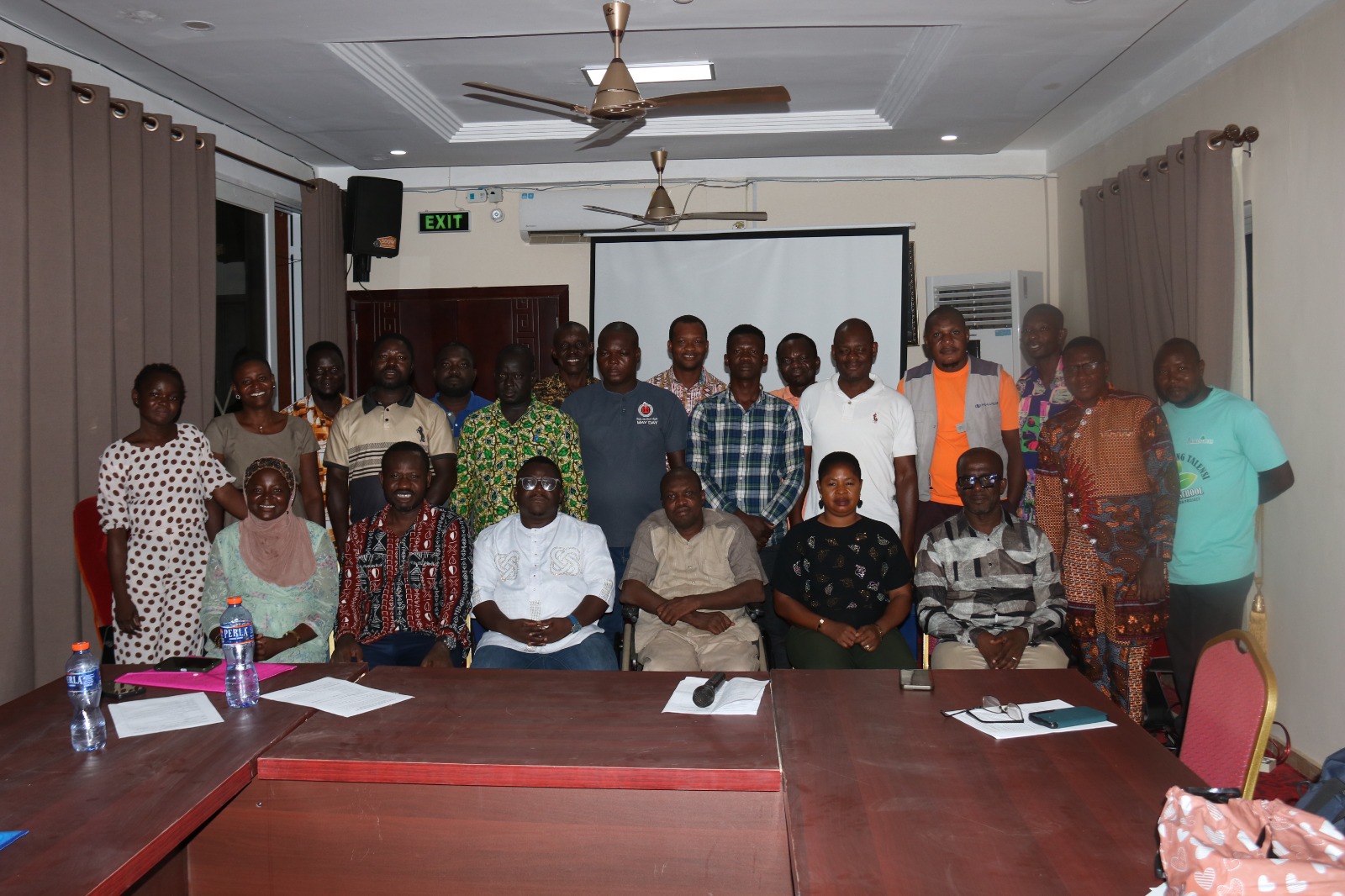
The training was organised by the Forum for Natural Regeneration, FONAR, in partnership with Department of Agriculture and the Ghana Journalists Association. It was held on Thursday, September 17, 2026, at the Blue Sky Hotel at Kombosigo in the Boogatanga East District of the Upper East Region
The programme was aimed at helping journalists understand Striga and report more accurately on its effects on farmers, food production and livelihoods
Striga, also known as witchweed, is a parasitic plant that attacks crops such as maize, millet, sorghum and upland rice
It attaches itself to the roots of crops and takes water and nutrients from them. In many cases, the crop can be seriously affected before the Striga plant becomes visible above the ground
FONAR says Striga is found in all 15 districts of the Upper East Region. The organisation’s Executive Director, Sumaila Seidu Saaka, has also warned that Striga infestation can cause up to 60 per cent losses in cereal production in northern Ghana, while serious infestation can lead to complete crop failure. Participants at the training were taken through practical ways of identifying and controlling the weed. These include rotating crops, intercropping, removing Striga early before it produces seeds, improving soil fertility and using crop varieties that can tolerate or resist the weed. FONAR is also promoting Farmer Managed Natural Regeneration and agroforestry as part of efforts to improve soil health and restore degraded farmland
The training forms part of FONAR’s wider 2026 campaign to educate farmers and other stakeholders about Striga and how to control it
Journalists were encouraged to take the issue beyond the workshop by visiting affected farms, speaking to farmers and agricultural officers, and reporting on the real impact of Striga on crop yields and household incomes. The organisers say better public education and accurate reporting can help farmers understand the problem and adopt practical measures to reduce Striga infestation