UE/R: SOCO PROJECT FACILITATORS URGED TO WORK HARD FOR THE SUCCESS OF THE PROJECT – DCE NABDAM
By – Sadat Dabo
The Legal Aid Commission has assured the public that its legal advice, consultation and Alternative Dispute Resolution (ADR) services are free for everyone, while access to court representation is subject to specific eligibility assessments in certain cases
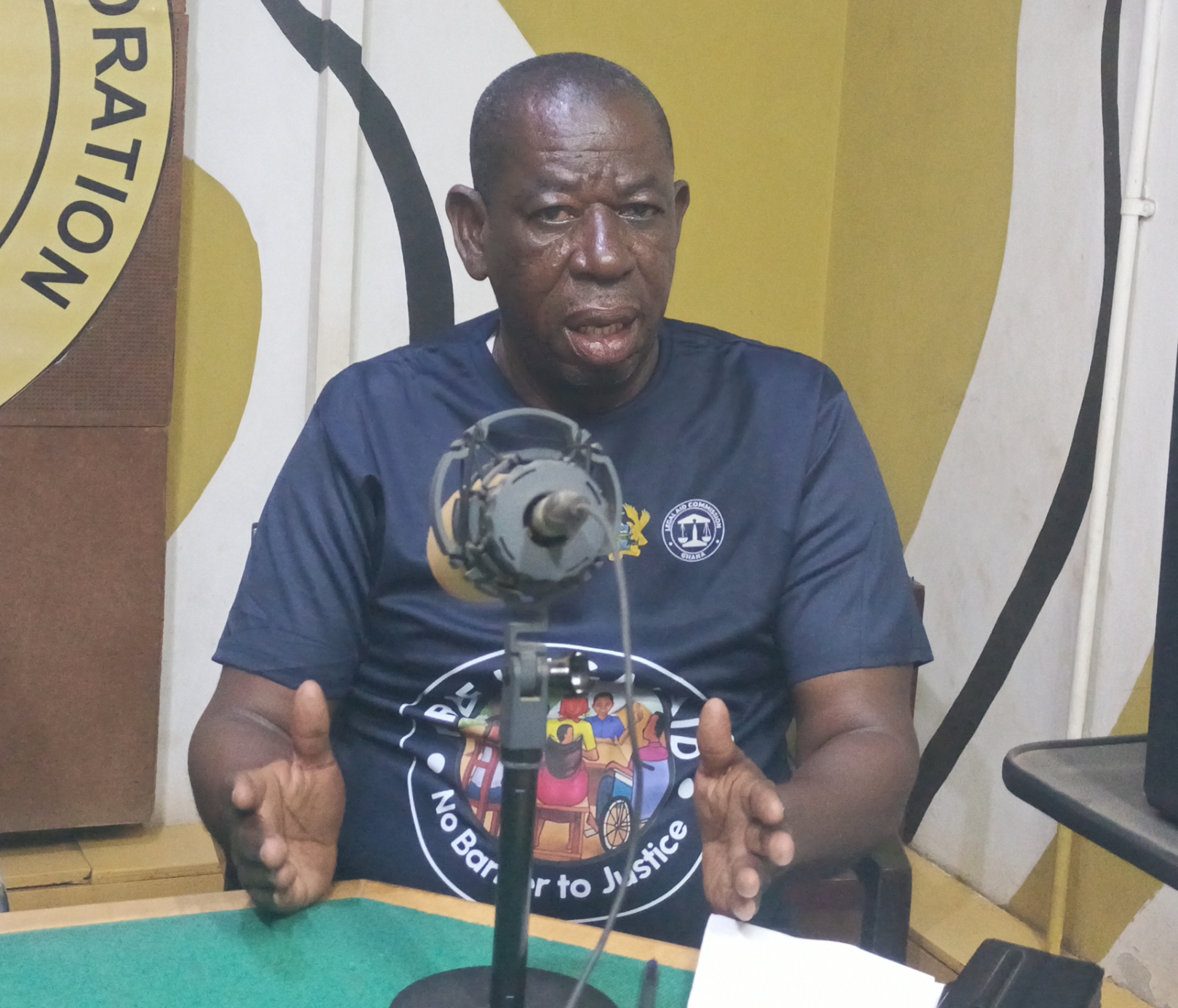
The Upper East Regional Director of the Legal Aid Commission, Lawyer Issahaku Tahidu Lawal, made this known during an interview on URA Sunrise on GBC URA Radio in Bolgatanga on Wednesday, October 14, 2026, as part of activities marking Legal Aid Week from October 12 to 16
The celebration is being held under the theme Justice at Your Doorstep
Lawyer Lawal explained that the Commission provides three main services: legal advice and consultation, Alternative Dispute Resolution (ADR), particularly mediation, and legal representation in court
According to him, the first two services are available to everyone at no cost, regardless of age or financial status
“Everyone qualifies for legal aid. Our services, like my colleague rightly mentioned earlier, are in three-fold. First is the legal advice and consultation. So anyone and everyone can access legal advice and consultation at no fee at all,” he said
He added that mediation and other out-of-court settlement processes are also free, giving individuals an opportunity to resolve disputes without necessarily going through lengthy court proceedings
Minimum wage earners and the poor may qualify for court representation
The Regional Director clarified that although everyone can access legal advice and mediation, the Commission assesses applicants seeking legal representation in certain civil cases to determine whether they can afford a private lawyer
He explained that the Commission focuses on indigent persons, particularly the poor, vulnerable and needy members of society
According to the interview, persons earning at or below Ghana’s then-applicable daily minimum wage of GH¢21.77 may qualify for legal aid, subject to the Commission’s assessment
However, he stressed that income alone does not determine eligibility
Applicants may also be assessed based on their properties, businesses, employment status, family circumstances and whether relatives are reasonably able to assist them in obtaining legal representation
“We do investigations before we arrive at a decision,” he explained, adding that the assessment is intended to ensure that people who can afford private legal services do not unnecessarily take up resources meant for the disadvantaged
He noted that someone from a wealthy family may still qualify if the circumstances of the dispute, including a conflict with family members, mean that assistance from relatives is not realistically available
Child maintenance and custody cases receive special consideration
Lawyer Lawal said the Commission does not apply the same means assessment to certain criminal matters and cases involving children
He explained that when a person approaches the Commission for assistance in a criminal matter, the Commission takes up the case, while child maintenance and custody matters are handled with particular attention to the welfare and best interests of the child
He said the Commission intervenes in maintenance disputes to help ensure that children receive the necessary support and that their needs are protected
The explanation is particularly significant for parents and guardians who may be unable to afford lawyers to pursue maintenance payments or resolve custody disputes
No payment from filing to the end of a qualifying case
The Regional Director also dismissed concerns that clients who qualify for legal representation must pay court filing fees or other legal expenses themselves
He stated that once a person is granted legal aid, the individual is not expected to pay for the legal process covered by the assistance, from filing the case to its conclusion
“When we prepare the documents, we put our stamp on top. And then we sign. When you take it to any court, once they see the stamp there, they will file it without taking a personal fee,” he explained
He reiterated that the Commission’s services are intended to ensure that financial difficulties do not prevent eligible persons from seeking justice
Professionally trained mediators handle disputes
Addressing concerns about the relatively young appearance of some Commission staff and whether clients trust them with sensitive matters, Lawyer Lawal assured the public that the officers are professionally trained mediators
He explained that cases are first referred to the mediation team, which attempts to help the parties reach an amicable settlement
If mediation fails, the matter may be referred to a lawyer for court representation
He said the separation of responsibilities is deliberate, as lawyers who later represent a party in court should not be privy to confidential details disclosed during mediation
This approach, he explained, helps protect confidentiality, maintain neutrality and preserve public confidence in the Commission
Legal Aid Week promotes access to justice
The interview forms part of efforts to educate the public about the Commission’s mandate and encourage vulnerable people to seek assistance when faced with legal challenges
The Regional Director was accompanied by Barbara Alo and Gilbert Zemtaam, Assistant ADR Officers, and Magdalene Awingura, a volunteer

As the Commission marks Legal Aid Week under the theme Justice at Your Doorstep the message from the Upper East Regional Director is that people should not allow financial difficulties or uncertainty about the legal system to prevent them from seeking help
While legal advice and mediation are free for everyone, applicants seeking court representation in certain civil cases must satisfy the Commission’s eligibility requirements
The Commission says its ultimate objective is to make justice accessible, protect the rights of vulnerable people and provide an avenue for resolving disputes fairly
Source – gbcuraonline.com