UE/R: SOCO PROJECT FACILITATORS URGED TO WORK HARD FOR THE SUCCESS OF THE PROJECT – DCE NABDAM
By – Gladys Apuweni
Experts in water, sanitation and hygiene (WASH) have called for climate resilient infrastructure and improved service delivery in schools, healthcare facilities and public spaces to minimise disruptions caused by droughts, flooding and other climate related challenges
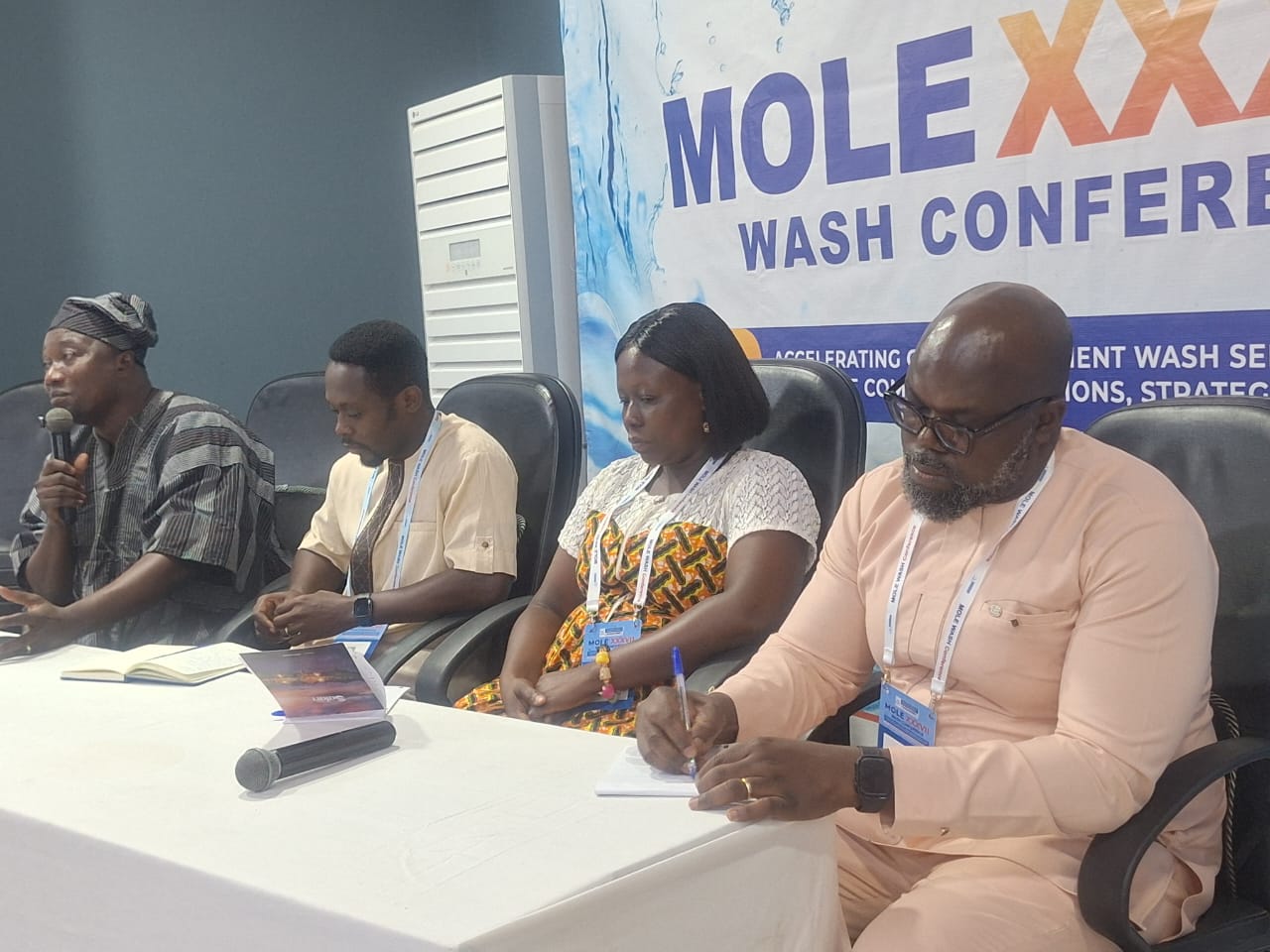
They made the call during a panel discussion on the sub theme, “Climate Resilient WASH Interventions in Institutions and Public Spaces,” at the XXXVII (37th) MOLE Conference, where they highlighted the growing threats of climate change to water security, sanitation and the quality of essential public services, particularly in northern Ghana
Festus Fofie of Catholic Relief Services (CRS) observed that communities in northern Ghana were particularly vulnerable to prolonged dry spells, which often caused water facilities to dry up during the peak of the dry season.
He said the situation disrupted essential services in schools and healthcare facilities, where access to water was critical for maintaining hygiene, infection prevention and control, and the delivery of quality healthcare
He also pointed to recurrent flooding in communities along the White Volta Basin, particularly in flood-prone areas, noting that flooding affected sanitation facilities and disrupted the operations of public institutions
Mr Fofie stressed the need for improved technical standards in borehole development, explaining that proper hydrogeological investigations, pumping tests and water quality assessments were essential to ensuring sustainable water supply throughout the year
He expressed concern that some boreholes were drilled during the rainy season, a practice he said could compromise efforts to establish reliable water sources capable of meeting communities’ needs during the dry season
According to him, water facilities must meet the Ghana Community Water and Sanitation Agency’s (CWSA) recommended minimum yield requirements, citing approximately 11.5 litres per minute for hand pump boreholes and more than 80 litres per minute for mechanised systems
He further called for a review of the country’s WASH in schools implementation model, which he noted was developed in 2014, to adequately incorporate climate resilience into school water, sanitation and hygiene interventions
Professor Simon Mariwah, Professor of Health and Development Geography at the University of Cape Coast, emphasised that climate resilience in the health sector must go beyond the availability of physical infrastructure to include the quality and continuity of healthcare services
He explained that climate related shocks could damage health infrastructure and compromise the quality of care, particularly when essential services such as water and sanitation were disrupted
He stressed that healthcare facilities required resilient systems capable of withstanding climate related pressures to ensure uninterrupted service delivery and maintain acceptable standards of care
Also contributing, Dr Augustina D. Achigibah, Programme Manager for WASH for Public Health at WaterAid Ghana, highlighted the importance of integrating water, sanitation and hygiene interventions into broader public health programmes
She explained that WaterAid Ghana adopts an integrated approach that combines WASH with sexual and reproductive health and rights (SRHR), nutrition and other public health interventions to improve health outcomes among adolescents, mothers and vulnerable populations
Dr Achigibah observed that although some healthcare facilities had boreholes within their premises, water was often not connected to critical service points, forcing health workers to walk distances to fetch water while attending to patients
To address the challenge, she said WaterAid Ghana supports the provision of solar-powered mechanised boreholes and piped water systems that extend water access to maternity units, outpatient departments and other critical points of care
She said similar interventions were being implemented in schools to ensure that students had access to safe drinking water and could practise proper hand hygiene, particularly after using toilet facilities
Beyond infrastructure, Dr Achigibah underscored the importance of sustained hygiene behaviour change among households and communities, noting that access to safe water alone was insufficient to guarantee positive public health outcomes
She explained that water could become contaminated during transportation from collection points to households and during storage, even when it had been declared safe at the source
She therefore called for continuous community education on hand hygiene, environmental cleanliness, safe water transportation and proper household water storage
The experts agreed that building climate resilient WASH systems requires stronger infrastructure, adherence to technical standards, effective institutional planning and sustained community participation
They stressed that prioritising climate resilience in schools, healthcare facilities and public spaces was essential to protecting public health, safeguarding livelihoods and ensuring that essential services remained functional despite increasing climate related challenges
Source – gbcuraonline.com