UE/R: SOCO PROJECT FACILITATORS URGED TO WORK HARD FOR THE SUCCESS OF THE PROJECT – DCE NABDAM
By – Gladys Apuweni
WaterAid Ghana has called for increased investment in climate resilient Water, Sanitation and Hygiene (WASH) facilities in schools to protect the menstrual health, dignity and educational opportunities of adolescent girls, particularly those in remote, low income and climate vulnerable communities.
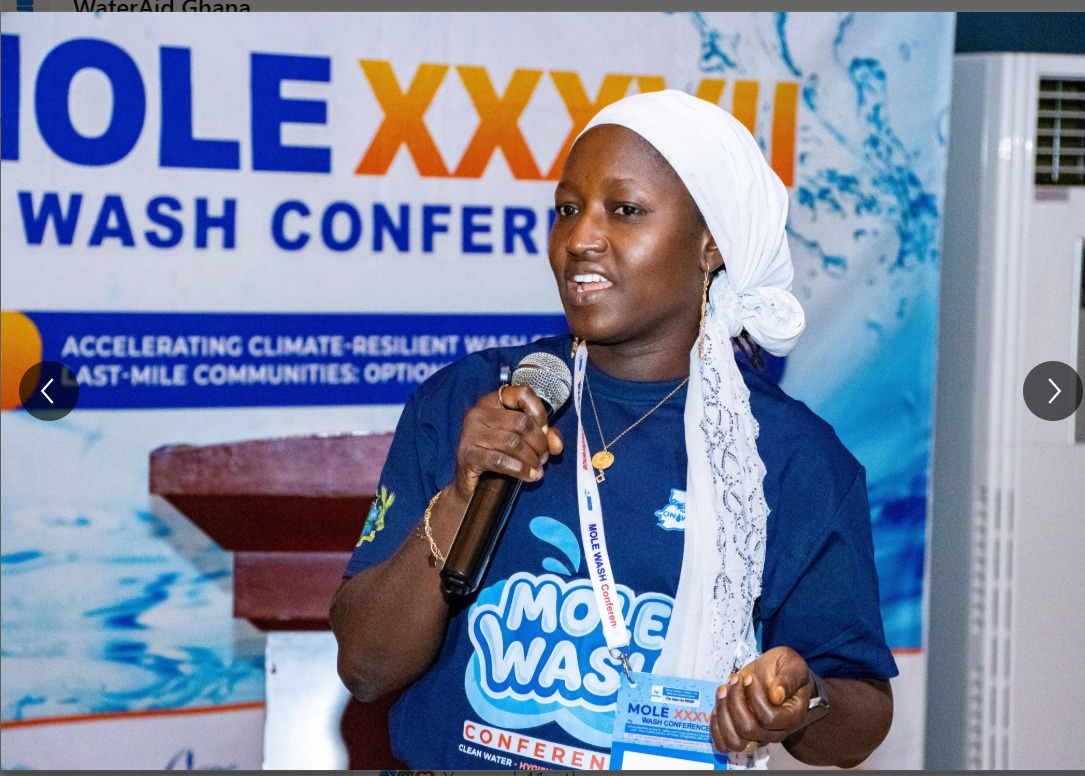
The call was made by Aliu Fauzia, Advocacy, Campaigns and Inclusion Manager at WaterAid Ghana, in a paper titled “Beyond Pads: Advancing Climate Resilient School WASH for Girls in Ghana’s Last Mile Communities,” presented at the 37th MOLE Conference.
The organisation says the provision of free sanitary pads is an important intervention in addressing menstrual health challenges, but must be complemented by reliable water supply, clean and accessible toilets, private changing spaces, handwashing facilities and safe menstrual waste disposal systems.
According to the paper, many adolescent girls continue to face significant challenges in managing menstruation safely and comfortably, especially in schools where essential sanitation facilities are inadequate or unavailable.
It noted that the cost of menstrual products, unreliable water supply, inadequate toilet facilities, lack of privacy, limited changing spaces, stigma and unsafe disposal options combine to make menstrual hygiene management difficult for girls.
The paper further explained that climate related challenges, including prolonged dry spells, water shortages and flooding, could worsen the situation by disrupting water and sanitation services in already vulnerable communities.
Free Sanitary Pad Initiative Needs Stronger Support.
WaterAid Ghana acknowledged the importance of government interventions, particularly the Free Sanitary Pad Initiative, in improving access to menstrual products among schoolgirls.
However, the organisation stressed that distributing sanitary pads alone would not sufficiently address the broader challenges confronting girls during menstruation.
It observed that access to menstrual products must be linked to functional WASH facilities, menstrual health education, appropriate healthcare support and effective waste management systems.
A Girl Child Coordinator quoted in the paper emphasised this concern, stating, “We can’t just pick the pads and go and give them to the students.”
The statement highlights the need for a more comprehensive approach that considers the actual conditions girls face in their schools and communities.
Climate Change Increases Menstrual Health Challenges.
The paper highlighted the connection between climate change, water insecurity and menstrual health, explaining that girls in climate vulnerable communities are particularly exposed to disruptions in essential WASH services.
When schools experience water shortages, girls may struggle to maintain personal hygiene and manage menstruation comfortably. Similarly, inadequate sanitation facilities and limited privacy can make the school environment less supportive for girls during their menstrual periods.
WaterAid therefore emphasised the importance of designing and maintaining school WASH facilities that can withstand climate-related disruptions and continue providing essential services to learners.
Call for an Integrated National Framework
To address the challenges, WaterAid Ghana is advocating an integrated national menstrual health framework that goes beyond the distribution of sanitary products.
The proposed approach should combine access to affordable and quality menstrual products with reliable water supply, clean and disability inclusive toilets, private changing facilities, handwashing points, menstrual health education, healthcare referrals and safe disposal systems.
The organisation also recommended stronger collaboration among government institutions, education authorities, health agencies, civil society organisations and other stakeholders to improve the planning and implementation of menstrual health interventions.
It further called for increased investment in school WASH infrastructure, regular monitoring and the collection of reliable data to assess whether interventions are improving the experiences of adolescent girls.
The paper also stressed the importance of involving girls in decisions concerning their menstrual health, while ensuring that the needs of girls with disabilities and those outside the formal school system are not overlooked.
Dignity Must Remain at the Centre
WaterAid Ghana maintains that menstrual health should be recognised as an essential part of equitable and climate resilient WASH service delivery, rather than treated as a standalone issue.
It argues that every girl deserves access to the facilities, products, information and support needed to manage menstruation safely, confidently and with dignity, regardless of where she lives or attends school.
The organisation believes that strengthening school WASH systems and integrating menstrual health into climate resilience planning will help create safer and more inclusive learning environments for girls across Ghana.
The central message of the paper is that providing sanitary pads is only the beginning; protecting girls’ menstrual health requires reliable water, adequate sanitation, privacy, education and sustained investment in climate resilient school WASH systems.
Source – gbcuraonline.com