UE/R: SOCO PROJECT FACILITATORS URGED TO WORK HARD FOR THE SUCCESS OF THE PROJECT – DCE NABDAM
By – Sadat Dabo
The Upper East Regional Health Directorate has called on media organisations, traditional authorities, religious leaders and community stakeholders to intensify public education and mobilisation ahead of the second round of the 2026 Mass Drug Administration (MDA) campaign against Onchocerciasis, commonly known as River Blindness.
The campaign, scheduled for November 15 to 28, 2026, targets 164,525 people out of an estimated 205,656 residents at risk of the disease in the Upper East Region.
The exercise will be conducted in four districts: Bawku West, Builsa South, Kassena Nankana West and Tempane, covering 14 identified sub-districts.
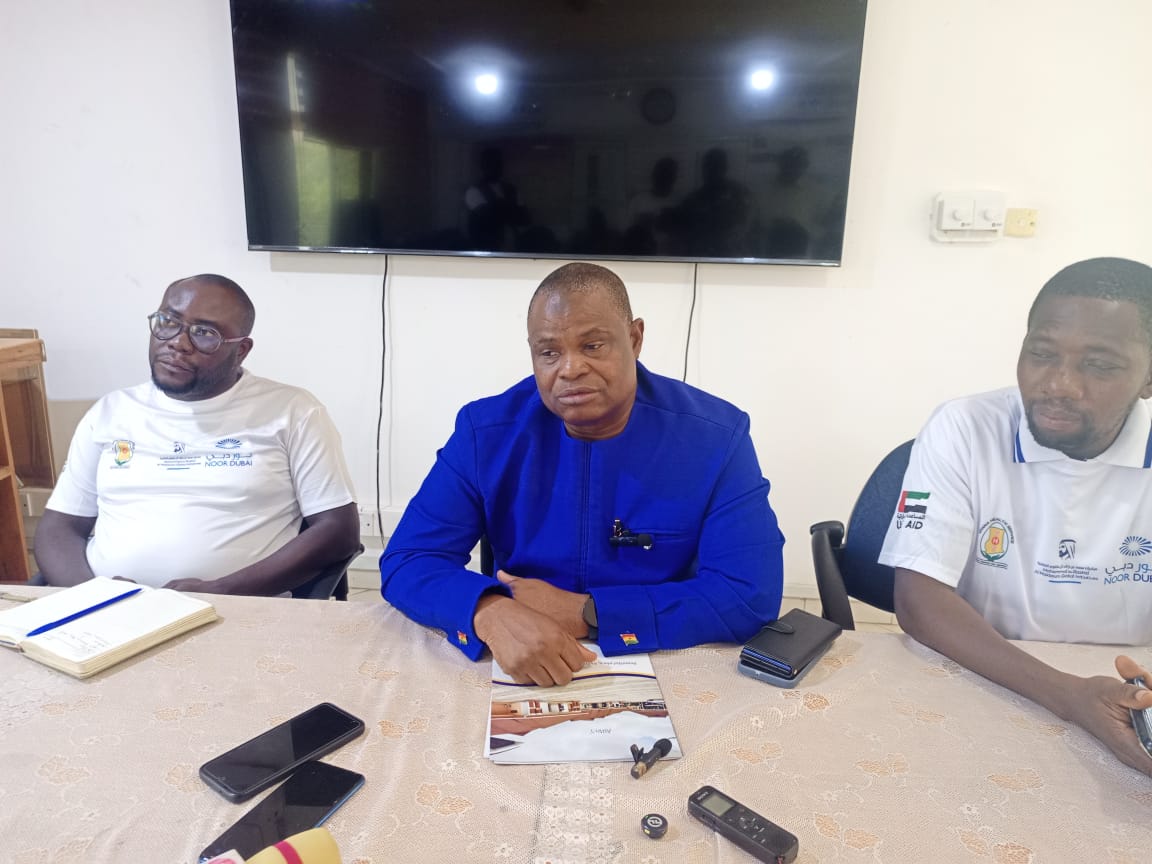
Addressing a media engagement on Thursday November 12, 2026 at the Regional Health Directorate in Bolgatanga, the Upper East Regional Director of Health Services, Dr Braimah Baba Abubakari, emphasised the critical role of the media in ensuring that residents understand the importance of the campaign and willingly participate in the drug distribution exercise.
He said effective public education and community mobilisation would be essential to achieving the required treatment coverage and advancing efforts to eliminate river blindness from affected communities.
Dr Abubakari was supported by the Acting Deputy Director of Public Health, Dr (Med) Zakariah Adam, and the Regional Neglected Tropical Diseases Coordinator, Mr Eric Dakura
The Regional Health Director appealed to journalists and media houses to use their platforms to educate residents about Onchocerciasis, the benefits of ivermectin treatment and the importance of participating in the campaign.
He also called on religious leaders, traditional authorities and Assembly Members in the beneficiary communities to support community sensitisation, mobilisation and monitoring of treatment uptake.
According to him, the involvement of the media is particularly important in addressing misinformation, dispelling misconceptions about the drugs and encouraging eligible residents to accept treatment when community distributors visit their homes.
The 2026 second-round campaign will adopt a house-to-house distribution strategy, with trained health workers and Community-Based Drug Distributors (CDDs) visiting households to administer ivermectin tablets to eligible residents.
The Directorate explained that the medicine is intended to interrupt disease transmission, reduce the complications associated with the infection and prevent avoidable disabilities, including blindness.
However, pregnant women, children below 90 centimetres in height, mothers breastfeeding babies less than one week old and persons who are seriously ill are excluded from receiving the medication during the exercise.
Eligible residents are encouraged to take the medicine immediately as directed by trained distributors.
The public has also been advised to report any suspected adverse drug reactions to community drug distributors or the nearest health facility for appropriate attention.
Onchocerciasis is a parasitic disease transmitted through the bites of infected blackflies that breed around fast-flowing rivers and streams.
The disease can cause severe itching, skin changes, including the condition commonly referred to as leopard skin, and visual impairment that may eventually lead to blindness.
The Ghana Health Service is implementing Mass Drug Administration using ivermectin as a key strategy to eliminate the disease, alongside sustained health education.
Nationally, the second-round 2026 campaign is expected to cover 86 participating districts across 15 regions, targeting approximately 6.3 million people in affected communities.
The Upper East Regional Health Directorate acknowledged the support of the Ghana Health Service, the National Neglected Tropical Diseases Programme, NOORDUBAI, the Regional and District Health Teams, community volunteers and beneficiary communities.
NOORDUBAI is identified as the main sponsor of the second round of the Mass Drug Administration campaign.
The Directorate expressed appreciation to all stakeholders and urged residents in the four beneficiary districts to cooperate with community distributors when the exercise begins.
It stressed that achieving high treatment coverage through collective participation remains crucial to preventing avoidable blindness and eliminating river blindness from the Upper East Region.
Source – gbcuraonline.com