UE/R: SOCO PROJECT FACILITATORS URGED TO WORK HARD FOR THE SUCCESS OF THE PROJECT – DCE NABDAM
By – Sadat Dabo
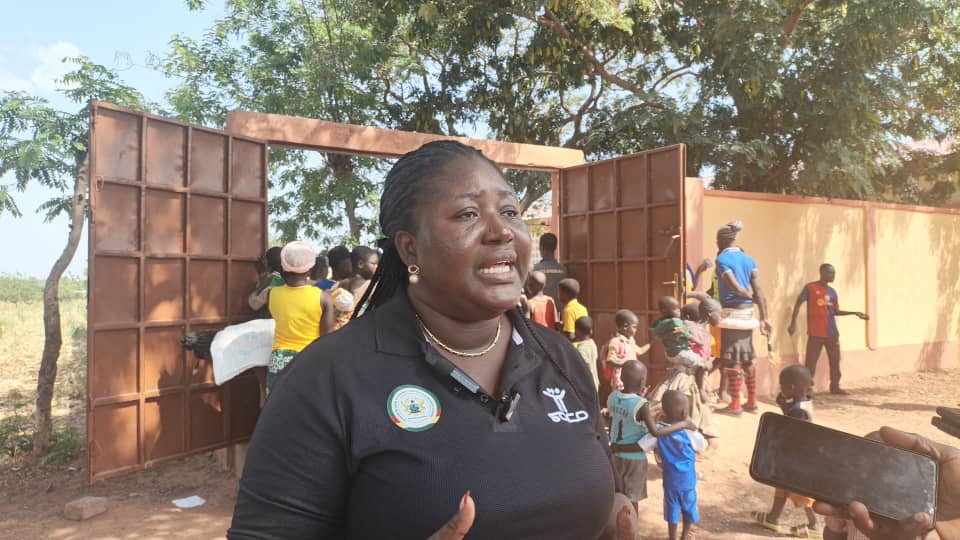
Ghana’s National Coordinator of the Gulf of Guinea Northern Regions Social Cohesion (SOCO) Project, Elizabeth Ohenewah Agyei, says the country has identified practical lessons from Togo that could improve the sustainability, climate resilience and community impact of SOCO-supported projects
She said lessons from the Togolese experience, particularly in classroom design, community participation and support for local football clubs, would help Ghana explore ways to strengthen its development interventions
Madam Agyei made the remarks on Thursday, October 29, 2026, after a Ghanaian SOCO delegation visited beneficiary communities in Togo as part of a four-day Ghana–Togo exchange programme
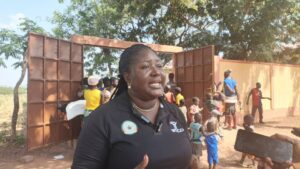
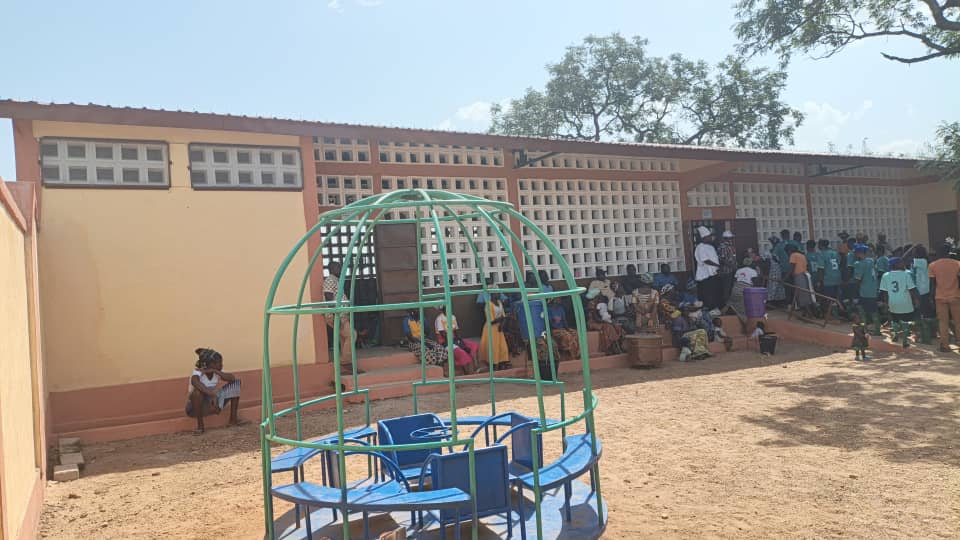
The visit took the team to Tambimongue and Tolong communities in the Mamproug/Canton cluster of Tandjoare 2 Municipality in Togo’s Savanes Region, where the delegation interacted with community members and beneficiaries to learn about project implementation
Classroom positioning emerges as key lesson
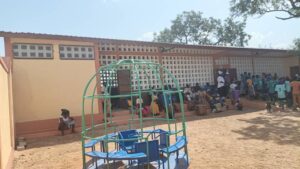
One of the major lessons Ghana identified from the visit was how the positioning of classroom blocks in Togo could help reduce direct sunshine while allowing adequate ventilation
Madam Agyei explained that the design and orientation of school buildings could help create cooler learning environments for children, even where classrooms have open windows
“One of the key things that stood out in the Togolese part is the fact that they have these open windows, but they still are not affected by the sunshine. One of the things they told me is that the positioning of the classroom block is very critical,” she said
She indicated that Ghana would consider incorporating relevant lessons into its implementation approach to improve the comfort of classrooms and strengthen climate resilience
According to her, although Ghana and Togo implement projects according to their respective national standards, there are opportunities to learn from each other’s practical experiences
She noted that Ghana follows Ghana Education Service standards, while Togo uses its own national requirements for educational infrastructure and other facilities
Community ownership key to sustainable development
The Ghanaian coordinator also highlighted community-driven development (CDD) as an important lesson from the exchange, stressing that projects are more likely to be sustainable when communities participate in identifying and prioritising their needs.
She said the Togolese approach demonstrated the importance of consulting community members and ensuring that everyone has an opportunity to contribute to decisions affecting their development
“The fundamental thing is that it is what the community prioritises that is done. You don’t impose or anything. And when it happens that way, the sustainability is better because ownership is very high,” she said
Madam Agyei described community involvement as a common principle across the four countries implementing SOCO, despite differences in their national systems and procedures
She said the exchange had reinforced the need for development projects to respond to the priorities of beneficiaries rather than being imposed on them
Ghana considers stronger support for community football clubs
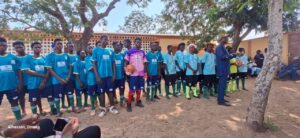
Another area Ghana could learn from Togo is the provision of football kits and uniforms to community clubs
Madam Agyei said many communities in northern Ghana already had football clubs that received support through tournament sponsorship and other forms of encouragement under SOCO
However, she said Togo’s approach to providing playing kits presented an additional opportunity Ghana could consider to strengthen community participation and social cohesion
“Looking at the standard that has been set in terms of providing uniforms, like providing the kits and other things, is also a very low-hanging fruit that we can take advantage of,” she said
She added that Ghana was considering how existing community clubs could receive better support, including through the provision of kits
Ghana urged to deliver on its regional responsibility
Beyond the practical lessons, Madam Agyei said the exchange had reinforced the importance of collective responsibility among Ghana, Togo, Benin and Côte d’Ivoire
She warned that the failure of any participating country to implement its component effectively could undermine the broader objectives of the regional initiative
“We are working in four countries, and everybody may think that Ghana is doing their own thing, Togo is doing their own thing, Benin is doing, Ivory Coast is doing, but no country can fail,” she said
She added that Ghana remained committed to implementing its part of the project despite the challenges encountered
Community empowerment also vital for security
Madam Agyei further stressed that community empowerment was essential to preventing violent extremism and reducing the risk of conflict spilling over from the Sahel
She argued that communities that feel included, heard and satisfied with development interventions can become important partners in identifying early warning signs and protecting their localities
“The spillover of conflict from the Sahel is real. And one of the things that we keep forgetting is that we may spend a lot on security, but there can be no better security than the community themselves,” she said
She maintained that empowered communities were better positioned to identify emerging threats and resist extremist activities before they escalate
Ghana–Togo exchange
The Ghanaian delegation was led by Madam Agyei, accompanied by the Upper East and North East zonal coordinators and other SOCO officials
The Togolese delegation included the country’s SOCO National Coordinator, Lare Dindiogue, who is also Mayor of Tandjoare 2 Municipality; Kolani Bassoming, Assemblyman for Tambimongue; and other SOCO staff
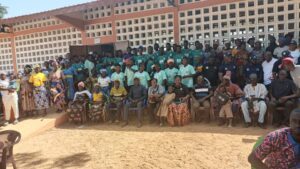
The four-day exchange programme provided an opportunity for the two country teams to interact with beneficiary communities, observe project implementation and share experiences on community-driven development
The lessons identified during the visit are expected to inform discussions on how Ghana can strengthen the sustainability of SOCO-supported infrastructure, improve community ownership and expand support for initiatives that promote social cohesion
Source – gbcuraonline.com