UE/R: SOCO PROJECT FACILITATORS URGED TO WORK HARD FOR THE SUCCESS OF THE PROJECT – DCE NABDAM
By – Sadat Dabo
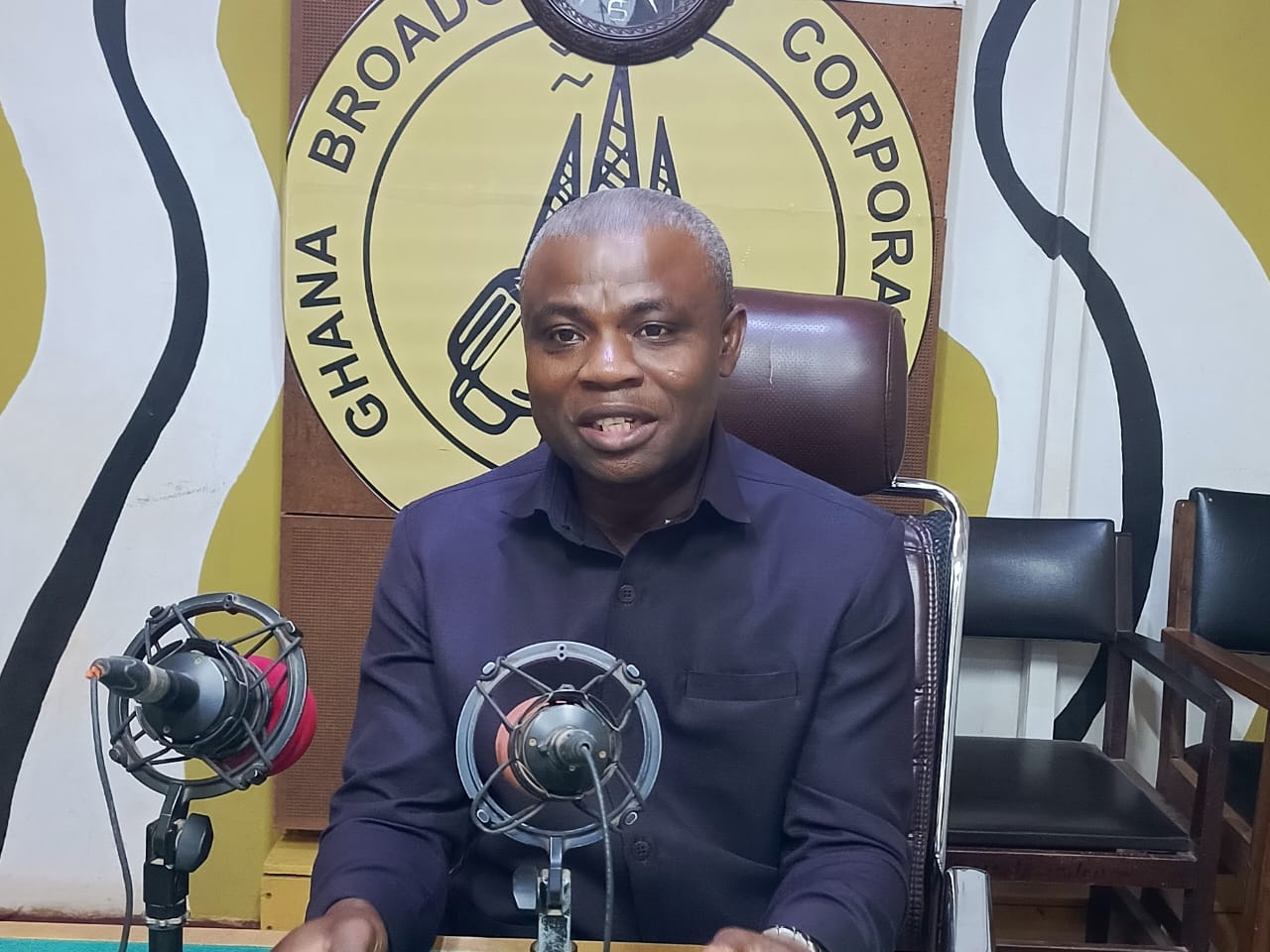
The Director-General of the Internal Audit Agency, Conrad Dumbah, has highlighted the Agency’s critical role in preventing financial irregularities, safeguarding public resources and strengthening accountability across Ghana’s public sector.
He says internal auditing is not merely about checking financial records but also ensuring that government institutions operate efficiently, comply with the law and deliver the intended results from public expenditure.
Mr. Dumbah made the remarks during an interview with Prosper Adaakai on GBC URA Radio in Bolgatanga in the Upper East Region on Friday, November 13, 2026.
He explained that the Internal Audit Agency, established under the Internal Audit Agency Act, 2003 (Act 658), is mandated to facilitate, coordinate and provide quality assurance for internal audit activities across public sector institutions.
According to him, the Agency plays a supervisory and coordinating role by ensuring that internal audit units in ministries, departments, agencies, metropolitan, municipal and district assemblies, universities and state-owned enterprises perform their statutory responsibilities effectively.
He noted that internal auditing is an important management function that provides institutions with continuous and real-time assurance on their financial operations, internal controls, risk management and compliance with established laws and regulations.
Mr. Dumbah distinguished internal auditing from external auditing, explaining that while external auditors, including the Audit Service, typically examine financial records after transactions have occurred, internal auditors work within institutions to identify weaknesses and recommend corrective measures before they develop into major problems.
He illustrated this with a fixed-asset audit, explaining that internal auditors could identify missing equipment, such as microphones and other broadcasting gadgets, and alert management to address the discrepancies before external auditors arrive.
Under the Public Financial Management Act, 2016 (Act 921), public sector institutions are required to maintain internal audit functions and prepare annual audit work plans.
Mr. Dumbah said internal audit units are also required to submit quarterly reports to the Agency, enabling it to monitor their activities, assess the quality of their work and ensure that planned audits are undertaken.
He added that the Agency provides continuous professional development, technical assistance, training, seminars and operational guidelines to strengthen the capacity of internal auditors across the country.
The Director-General stressed that internal auditing is essential to ensuring that government resources translate into tangible development outcomes.
He identified compliance, effectiveness and efficiency as the three major areas that internal auditors must safeguard.
He explained that compliance ensures that public institutions operate within the law, effectiveness guarantees that expenditure achieves its intended purpose, while efficiency ensures that available resources are used optimally to deliver maximum results.
Using infrastructure development as an example, he said internal auditors must be able to identify when contractors deviate from approved project specifications and alert management to prevent waste and ensure that projects are delivered as intended.
He maintained that strengthening internal audit systems would help government protect public funds, improve service delivery and advance its Reset Agenda.
Mr. Dumbah also highlighted ongoing institutional reforms, including the proposal to transform the Internal Audit Agency into an Internal Audit Authority to improve its operational effectiveness and strengthen its oversight responsibilities.
He said the proposed reforms would provide a stronger legal framework for the Agency’s operations, including formalising a review panel to examine quarterly audit reports, identify high-risk areas and engage management of public institutions to resolve outstanding audit issues.
He further discussed proposals for the establishment of an Auditors Court, which he said could introduce stronger enforcement mechanisms to deal with financial irregularities and improve the recovery of misappropriated public funds.
According to him, the proposed court draws inspiration from the Francophone auditing system, where audit courts exercise judicial powers in dealing with public financial misconduct.
He explained that the proposed arrangement is expected to complement Ghana’s existing parliamentary oversight mechanisms and provide a more robust approach to addressing financial irregularities.
Meanwhile, the Internal Audit Agency is preparing to host its annual national conference from November 19 to 20, 2026, at the University of Professional Studies, Accra (UPSA) Auditorium.
The conference will be held under the theme: “Internal Audit and Governance Reset Agenda: Strengthening Controls, Safeguarding Resources, and Driving Economic Resilience.”
President John Dramani Mahama is expected to attend as the Special Guest of Honour.
Other expected speakers include the Agency’s Board Chair, Professor Joshua Abo; Director-General of the Value for Money Office, Dr. Abdul-Basit Bamba; and Head of the Local Government Service, Professor Lord Mensah, alongside other experts in finance, governance, risk management and internal controls.
Mr. Dumbah said the conference would bring together internal auditors from across the country, audit committee members, heads of institutions, private sector professionals, academics and governance experts to deliberate on how internal auditing could contribute to national development.
He explained that discussions would focus on strengthening internal controls, improving accountability and ensuring that public expenditure delivers value for money.
He also encouraged heads of public institutions to embrace internal auditors as partners in effective management rather than perceive them as obstacles to administrative decisions.
Sharing his own management practice, Mr. Dumbah disclosed that payment requests presented to him as Director-General are first subjected to internal audit checks before approval, describing the practice as a four-eye control mechanism.
He urged public sector managers and other stakeholders to strengthen collaboration with internal audit units to prevent financial mismanagement and promote responsible use of public resources.
He called on Ghanaians to support efforts to build a corruption-free country where public resources are properly managed and translated into improved services and development for citizens.
Source – gbcuraonline.com