UE/R: SOCO PROJECT FACILITATORS URGED TO WORK HARD FOR THE SUCCESS OF THE PROJECT – DCE NABDAM
By – Gladys Apuweni
Ghana could face the prospect of importing water in the coming decades if urgent measures are not taken to protect its rivers and other freshwater resources from pollution, the Minister for Works, Housing and Water Resources, Hon. Ahmed Ibrahim, has warned
He said increasing pollution of water bodies, rapid urbanisation and population growth were placing mounting pressure on the country’s water resources, making it imperative for government, communities and other stakeholders to intensify efforts to safeguard freshwater sources and invest in sustainable water and sanitation systems
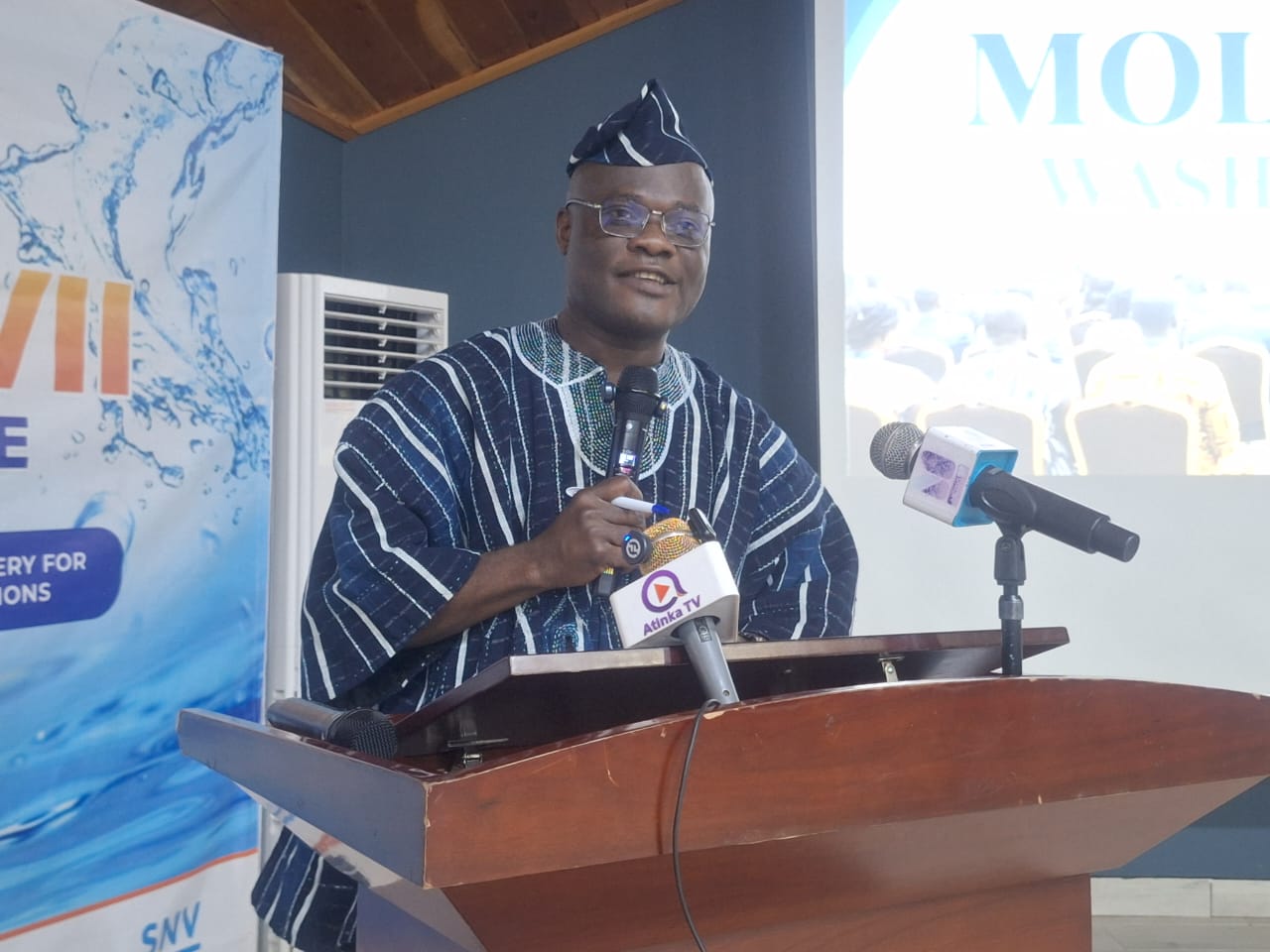
Speaking at the 37th MOLE Conference at Aqua Safari Resort in Big Ada on Monday, November 2, the Minister stressed that Ghana could no longer address its growing water and sanitation challenges with outdated approaches, insisting that increased investment, effective planning and behavioural change were critical to securing the country’s water future
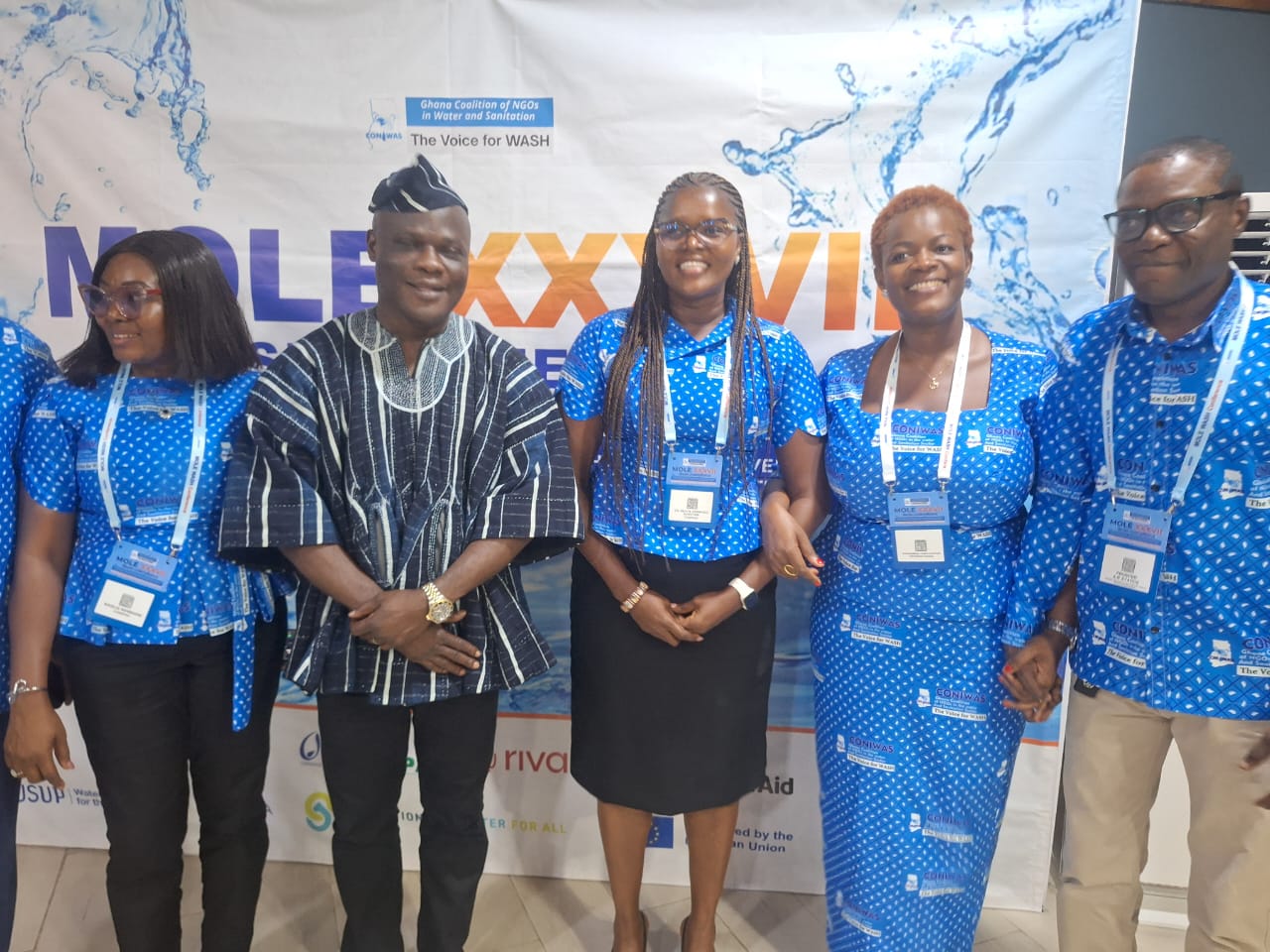
The six day conference, organised by the Coalition of NGOs in Water and Sanitation (CONIWAS), is being held under the theme: “Accelerating Climate Resilient WASH Service Delivery for Last Mile Communities, Options, Strategies and Actions.”
Mr. Ibrahim commended CONIWAS, its executives and the planning committee for organising what he described as a conference of international standard, providing a platform for meaningful knowledge sharing, informed discussions and practical solutions to challenges confronting Ghana’s water, sanitation and hygiene (WASH) sector
He, however, said the next critical step was to translate the commitments, promises and pledges made at such gatherings into measurable actions capable of improving access to safe water and sanitation, particularly in underserved communities.
Water security requires urgent investment
The Minister said Ghana had made considerable progress in expanding access to basic water services, with national coverage estimated at between 89 and 90 per cent. However, he noted that access to safely managed water remained a concern requiring sustained investment and stronger interventions
He also expressed concern about the country’s sanitation situation, observing that indicators showed a decline between 2019 and 2025, a development he said required urgent attention.
According to him, the growing urban population demands more sophisticated water treatment infrastructure, effective sewage management, improved sanitation facilities and proper urban planning.
“Clearly, you can’t be managing today’s sanitation and water problems with yesterday’s solutions,” he stressed, calling for increased budgetary allocations to match the growing demands of the sector
Mr. Ibrahim explained that financing commitments under the presidential compact on water and sanitation signed in 2024 remained a national responsibility that transcended changes in government
He said the current President recognised the challenges associated with water shortages, particularly in parts of northern Ghana, and was committed to addressing longstanding difficulties in water supply
The Minister cited persistent water challenges in parts of the Savannah, Northern and North East regions, expressing optimism that sustained government investment would help resolve some of the difficulties confronting communities
Pollution threatens Ghana’s water future
Mr. Ibrahim warned that the pollution of major rivers could undermine Ghana’s long term water security if decisive measures were not taken to protect them
He identified the Black Volta and White Volta among the country’s important water resources that required protection, urging Ghanaians to recognise the economic, social and environmental value of freshwater
He also highlighted concerns surrounding the pollution of the Tano River, which serves as an important water source, and called for dialogue and cooperation between Ghana and Côte d’Ivoire to address concerns about the river’s condition
The Minister said protecting water bodies should be considered a central component of climate resilience, noting that the sustainability of water supplies depended on how effectively the country managed its rivers, forests and surrounding ecosystems
He cited tree planting along the Tano River as part of efforts that helped protect water resources during a water crisis in Sunyani, arguing that environmental protection must complement investments in water infrastructure
He urged communities to abandon practices that pollute rivers and called for stronger collective action to preserve the country’s natural resources for future generations
“We have been blessed with so many rivers. Why don’t we protect them? Do we know their value?” he asked.
Emphasising the importance of water to human survival, Mr. Ibrahim challenged Ghanaians to reconsider the value they placed on freshwater resources compared with mineral wealth.
“Can you eat gold?” he asked
underscoring the importance of prioritising water security and environmental protection.
Media urged to strengthen WASH reporting
The Minister also called on journalists to intensify public education and specialised reporting on water, sanitation and hygiene issues, describing effective communication as essential to improving accountability and securing public support for reforms
He commended media organisations that were developing expertise in WASH reporting and encouraged greater transparency in addressing the challenges confronting the sector.
He said public access to accurate information would help citizens understand the difficulties involved in providing water and sanitation services while enabling stakeholders to contribute to finding lasting solutions
Mr. Ibrahim recalled Ghana’s historical efforts to combat guinea worm disease through improved access to safe water, highlighting the contributions of successive governments, non governmental organisations and development partners
He said the changing demographic landscape, with a growing proportion of the population living in urban areas, required the country to move beyond expanding basic water access towards ensuring that water was properly treated and safely managed
The Minister also announced that Ghana was preparing for the UN Water for People Dialogue scheduled for November 8 to 10, 2026, in Abu Dhabi, where Ghana and Switzerland were expected to share leadership in the dialogue
He said the MOLE Conference provided an important opportunity to generate recommendations that could inform Ghana’s position and commitments at the international engagement
The conference, which runs from November 1 to 6, 2026, brings together stakeholders in the water, sanitation and hygiene sector to examine strategies for strengthening climate resilient service delivery, particularly for communities at the last mile of development
Source – gbcuraonline.com