UE/R: SOCO PROJECT FACILITATORS URGED TO WORK HARD FOR THE SUCCESS OF THE PROJECT – DCE NABDAM
By – Gladys Apuweni
The Coalition of NGOs in Water and Sanitation (CONIWAS) has called for increased domestic investment, stronger institutional reforms and greater government accountability to address Ghana’s widening water, sanitation and hygiene (WASH) challenges, warning that the sector faces a financing gap exceeding US$1.5 billion
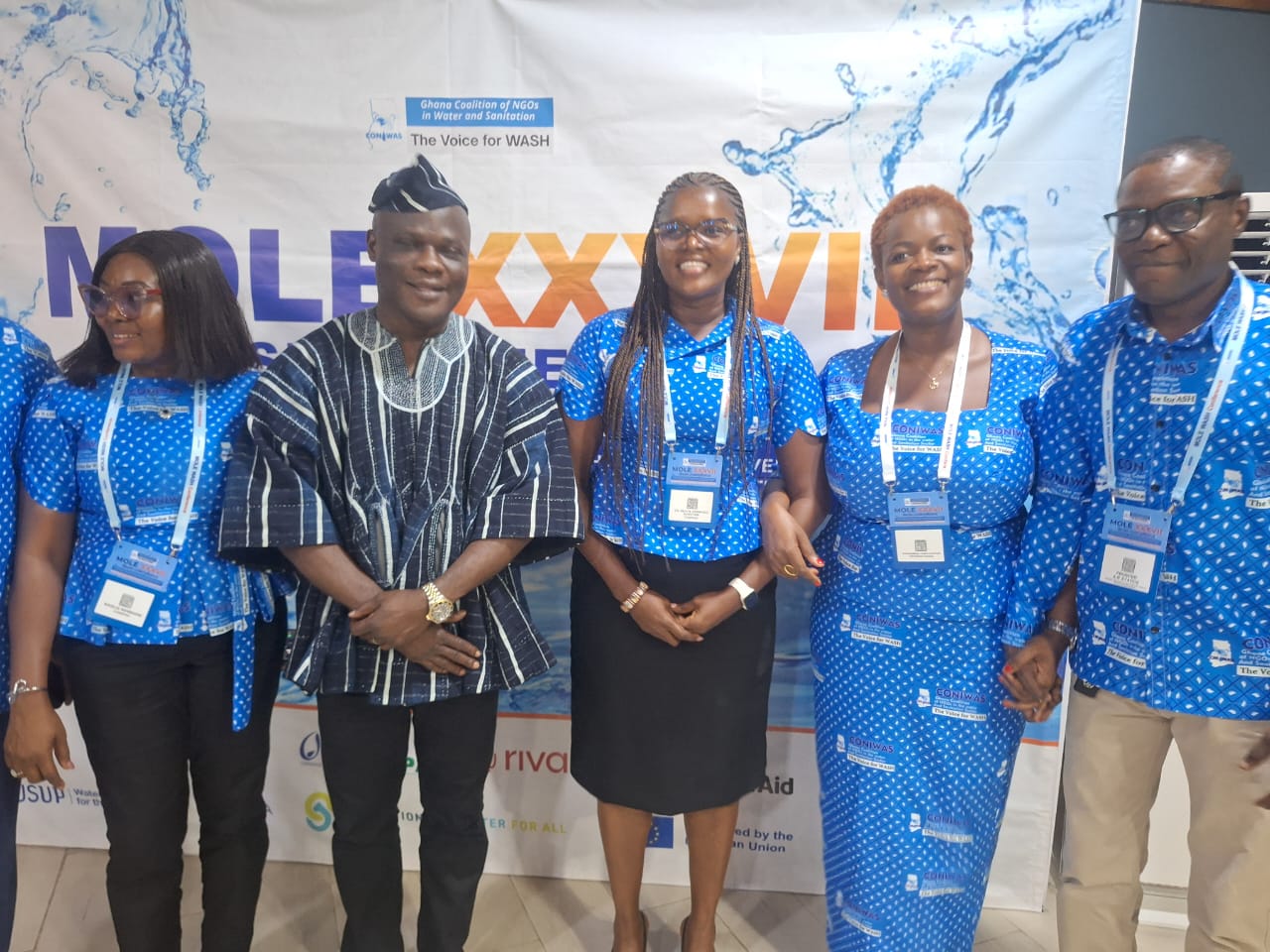
The Chairperson of CONIWAS, Dr. Beata Awinpoka Akanyani, made the call at the opening of the 37th MOLE WASH Conference at Aqua Safari Resort in Ada Foah, Greater Accra Region
The conference, running from November 1 to 6, 2026, is being held under the theme: “Accelerating Climate Resilient WASH Service Delivery for Last Mile Communities, Options, Strategies and Actions.” She stressed that the country must move beyond policy commitments to deliver tangible and sustainable water and sanitation services, particularly to underserved rural communities and vulnerable populations
Dr. Akanyani cited figures highlighting persistent inequalities in access to essential services, noting that approximately one in four rural residents lacks basic water services, while only 17 percent have access to safely managed water. She further disclosed that basic water coverage stood at 96.4 percent in urban areas, compared with 74.4 percent in rural communities, representing a 22 percentage point gap. Rural basic hygiene coverage had also declined from 36 percent in 2015 to 31 percent in 2024, while open defecation remained significantly higher in rural areas
On financing, she said CONIWAS’ budget review showed that the WASH sector’s share of the national budget declined from 0.81 percent in 2023 to 0.29 percent in 2024. Although approximately GH¢1.874 billion was identified across selected WASH related allocations for 2026, she said the figure remained far below the estimated annual sector requirement of US$1.7 billion. She cautioned that budget allocations alone were insufficient, emphasising the need for timely releases, effective expenditure and transparent accountability
Dr. Akanyani, however, commended the government for increasing the District Assemblies Common Fund allocation for WASH to 20 percent, with 10 percent earmarked for potable water and 10 percent for environmental sanitation. She also welcomed the €323 million financing package for the Northern Ghana Water and Sanitation Project, expected to benefit more than 1.4 million people in Tamale, Yendi and Damongo, while supporting faecal sludge treatment facilities in Wa, Bolgatanga and Yendi
The CONIWAS Chairperson urged the government to reconvene the Joint WASH Sector Working Group, which she said had not met since January 2025, and establish a formal framework for sustained engagement with civil society organisations. She also called for the establishment of a National Sanitation Authority and Sanitation Fund, stronger environmental health units at the local government level, and improved monitoring of public expenditure on water and sanitation
She appealed to development partners, private sector actors, traditional authorities and the media to intensify their support for climate resilient WASH services, particularly in communities facing persistent water shortages and sanitation challenges
Dr. Akanyani said the success of the conference would ultimately be measured by the practical commitments and lasting improvements it generated, stressing that access to safe water, dignified sanitation and good hygiene should not depend on where a person lives, their income or their vulnerability to climate change
Source – gbcuraonline.com