UE/R: SOCO PROJECT FACILITATORS URGED TO WORK HARD FOR THE SUCCESS OF THE PROJECT – DCE NABDAM
By – Prosper Adaakai
The Upper East Regional Minister, Akamugri Donatus Atanga, has warned that weak spatial planning could undermine development projects, worsen uncoordinated settlement growth and make the provision of essential services more difficult across the region
He has therefore called for the Regional Spatial Planning Committee (RSPC) to become fully functional and work closely with the region’s Metropolitan, Municipal and District Assemblies (MMDAs) to ensure that physical development is guided by approved spatial plans
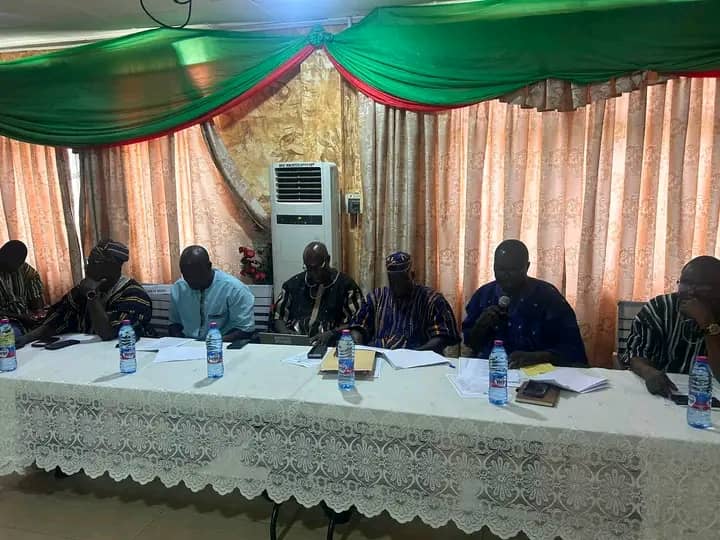
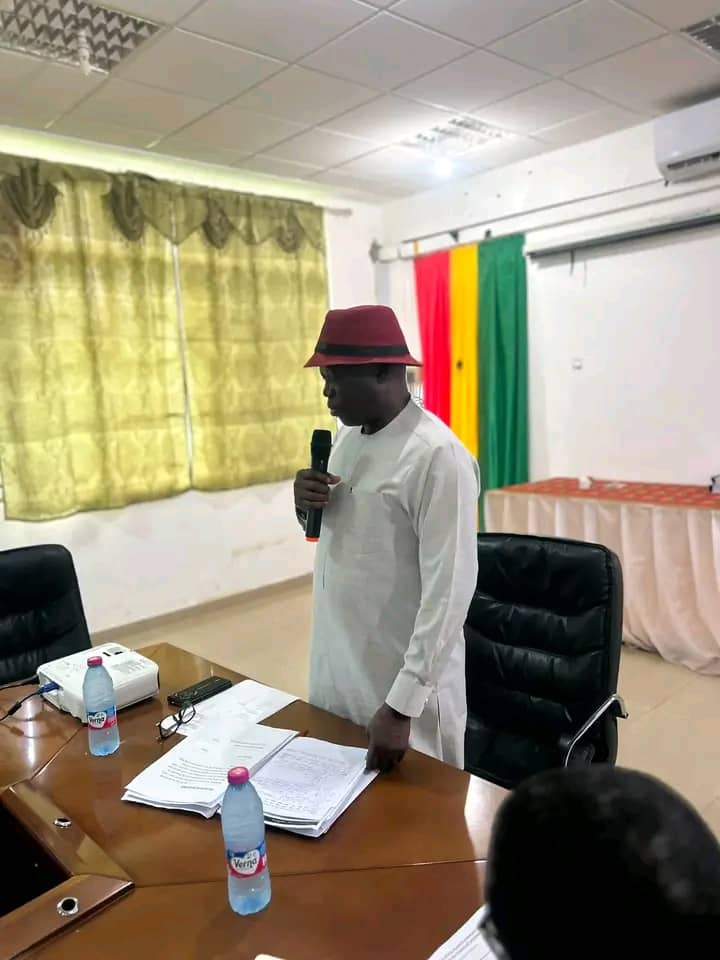
Mr Atanga made the call at the third-quarter meeting of the Regional Spatial Planning Committee held at the Regional Coordinating Council conference room
The Minister expressed concern that the committee had not been functioning effectively for more than a year, stressing that spatial planning should be treated as a fundamental component of the region’s development agenda
He cited the proposed Upper East Regional Airport as an example of a major project requiring advance spatial planning
According to him, an airport and associated infrastructure could stimulate new settlements and economic activity around the facility. Without proper planning, however, such growth could result in development patterns that would later be difficult and costly to regulate
“Spatial planning is very, very important,” he stressed, urging members of the committee to take their statutory responsibilities seriously
The Minister’s concerns come against the background of Ghana’s Land Use and Spatial Planning Act, 2016 (Act 925), which establishes the legal framework for coordinating land use, physical development and human settlements
Under Section 28 of the Act, the RSPC is responsible, among other functions, for developing a Regional Spatial Development Framework in consultation with the district assemblies and handling spatial-planning matters that affect multiple districts. The committee operates on behalf of the Regional Planning Coordinating Unit under the oversight of the RCC
The Land Use and Spatial Planning Authority (LUSPA) says its mandate is to promote sustainable development of land and human settlements through a decentralised planning system and to enable district assemblies to effectively perform their spatial-planning and human-settlement management functions. LUSPA’s regional offices also serve as secretariats to the RSPCs of the RCCs
The law provides for spatial development frameworks at national, regional and district levels, while planning permission and development-control mechanisms are intended to ensure that major developments conform to approved plans and planning standards
The Regional Minister’s warning also reflects concerns previously raised about the pattern of physical development in the Upper East Region
At a stakeholder engagement on the Upper East Regional Spatial Development Framework in October 2025, Mr Atanga described spatial planning as a strategic process for coordinating land use, infrastructure development, environmental protection and socio-economic growth
He said the proposed Regional Spatial Development Framework was expected to guide spatial development across the region’s 15 municipalities and districts over a 20-year period
He also acknowledged concerns over uncoordinated development, poor land-use practices and inadequate planning associated with urbanisation and changing settlement patterns
The issue is particularly significant as settlements around Bolgatanga and other growing communities expand and as the region seeks to attract major infrastructure and private-sector investments
Mr Atanga cited difficulties in accessing some parts of Bolgatanga during fire outbreaks as an example of how physical development patterns can affect emergency response and public safety
He said authorities must therefore avoid waiting until rural communities have expanded into large settlements before putting appropriate spatial plans and development controls in place
The Minister also linked effective spatial planning to sanitation and the delivery of basic services
He noted that communities designed and developed according to appropriate plans would make it easier for authorities to provide drainage systems, waste collection points, access roads and other public infrastructure
LUSPA similarly identifies coordinated planning, development control, zoning and the prevention of encroachment as important elements of sustainable human-settlement management. Its mandate includes ensuring the appropriate zoning of land and preventing breaches of zoning schemes
The Authority also provides technical support for the preparation and quality control of regional and district spatial development frameworks and monitors district assemblies in the performance of their human-settlement planning functions
Mr Atanga therefore urged the RSPC to regularly review the spatial plans of the various assemblies, identify emerging development pressures and engage the assemblies to ensure that new settlements and projects conform to appropriate planning frameworks
He said the region’s ambition to achieve higher levels of economic and social development must be anchored on effective spatial planning and stronger coordination among the RCC, LUSPA, MMDAs and other institutions
The call comes as the Upper East pursues several major development initiatives, including investment in agriculture and agro-processing, infrastructure projects and the proposed regional airport
Recent regional investment efforts under the PEARL Framework have also targeted agriculture, irrigation, agro-processing, manufacturing, renewable energy and related infrastructure
The challenge for the region, therefore, is not only attracting new investment but ensuring that the land-use, infrastructure and settlement systems required to accommodate that investment are planned before development outpaces regulation