UE/R: SOCO PROJECT FACILITATORS URGED TO WORK HARD FOR THE SUCCESS OF THE PROJECT – DCE NABDAM
By – Prosper Adaakai
The Acting Upper East Regional Director of the Department of Children, Georgina Aberese-Ako, has called for intensified climate action and environmental protection to safeguard water resources, ecosystems and livelihoods in northern Ghana
She said Ghana had only a few years left before the 2030 deadline for the Sustainable Development Goals (SDGs) and would ultimately be required to report to the United Nations on the progress made towards achieving the targets.
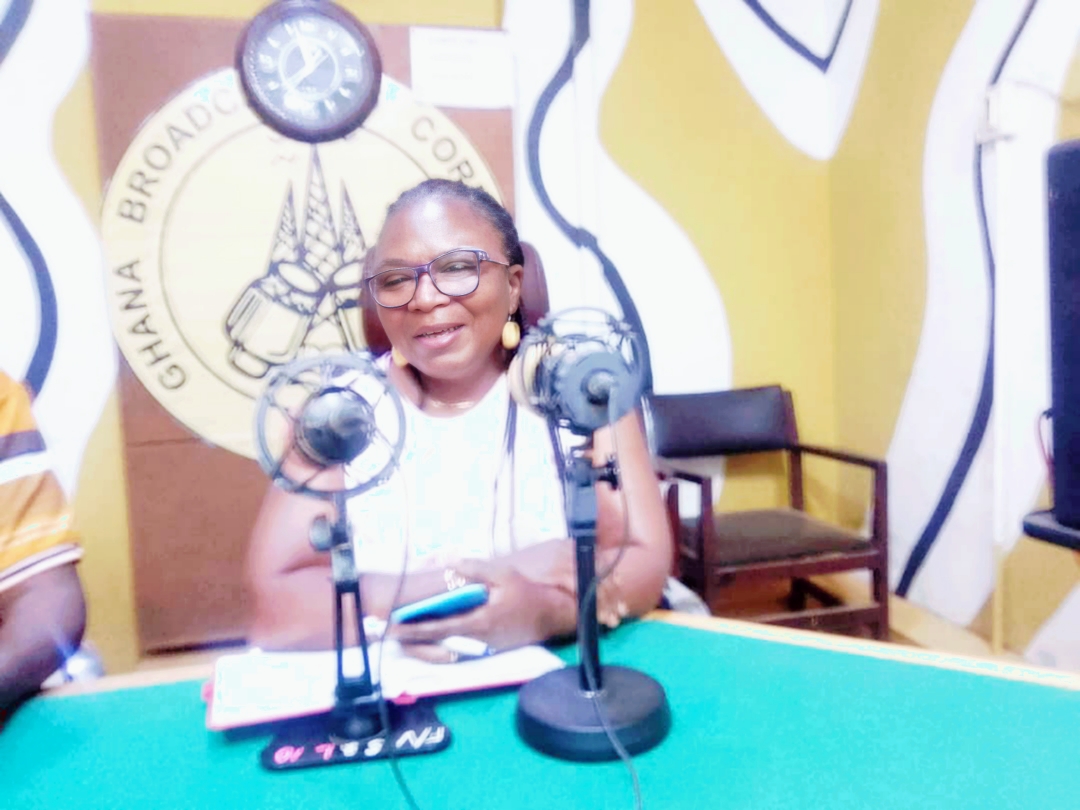
Speaking on the Sunrise Morning Show on GBC URA Radio 89.7 FM in Bolgatanga, Mrs Aberese-Ako linked the need for stronger climate action to the recent directive by the Talensi Traditional Council on mining activities in the traditional area
The Talensi Traditional Council on September 26, 2026, directed that mining activities within the traditional area should not be undertaken without the Council’s prior written consent and the requisite licences from the Minerals Commission and the Environmental Protection Authority. The Council also expressed support for responsible, legal and environmentally sustainable mining that creates jobs for the youth.
Mrs Aberese-Ako commended the Traditional Council for the directive but stressed the need for fair and consistent application of the measures
She said the protection of the environment should not be considered only in the context of mining, but as part of Ghana’s broader obligations under the SDGs, particularly goals relating to clean water, climate action and the protection of terrestrial ecosystems
The SDGs include Goal 6, which seeks to ensure the availability and sustainable management of water and sanitation for all, Goal 13, which focuses on urgent action to combat climate change and its impacts, and Goal 15, which seeks to protect, restore and sustainably use terrestrial ecosystems, forests and biodiversity
Ghana’s SDG framework identifies protection of water resources from pollution and strengthening resilience to water-related climate shocks as important components of Goal 6. It also tracks the condition of water bodies and the sustainable management of water resources
Mrs Aberese-Ako expressed particular concern about what she described as increasing heat waves in northern Ghana, linking them to the broader effects of global warming and climate change
Her concerns are consistent with climate information from the Ghana Meteorological Agency, which says Ghana is experiencing rising temperatures, changing rainfall patterns and more frequent extreme events. The Agency projects that extreme heat will become more frequent and intense, particularly in northern parts of the country
She said the effects of environmental degradation and climate change could have direct consequences for communities, particularly those whose livelihoods and domestic water supplies depend heavily on natural resources
Mrs Aberese-Ako further raised concerns about the impact of irresponsible mining on water bodies and economic trees, warning that damage to water resources could have serious consequences for communities that depend on groundwater
Her concern comes against the backdrop of warnings from the Water Resources Commission about human activities threatening groundwater quality and levels in the White Volta Basin. The Commission has identified illegal mining, sand winning, deforestation and poor environmental practices among activities threatening water security in northern Ghana
The Commission has also indicated that about 80 percent of the population within the White Volta Basin, estimated at between 3.5 and four million people, depends on groundwater for daily water needs. It warned that unregulated mining can increase the risk of groundwater contamination when mining operations penetrate groundwater sources
A 2025 study reported by the Ghana News Agency also found that climate change was contributing to reduced surface-water availability and groundwater recharge in parts of the Upper East Region, alongside rising temperatures, erratic rainfall and prolonged droughts
For communities where households rely on boreholes for drinking water and other domestic purposes, Mrs Aberese-Ako said the protection of underground water should therefore be treated as an essential public-interest issue
Northern Ghana’s dependence on groundwater is also reflected in development interventions. The United Nations Development Programme notes that aquifers in northern Ghana can occur between approximately 10 and 60 metres underground, while boreholes have been used to provide potable water to rural communities
Mrs Aberese-Ako’s comments add a child- and future-generation perspective to the current debate over mining in Talensi: environmental decisions taken today could influence the availability of water, productive land and other natural resources for communities in the years ahead
She therefore urged stakeholders, including traditional authorities, government agencies, mining operators and communities, to balance economic opportunities from mineral resources with environmental protection and long-term sustainability
The discussion comes as the Talensi Traditional Council seeks to strengthen customary oversight of mining while encouraging responsible mining that can create employment and contribute to development. The Council has also announced plans to collaborate with state agencies and establish a community monitoring committee to help enforce its resolutions
Source – gbcuraonline.com