UE/R: SOCO PROJECT FACILITATORS URGED TO WORK HARD FOR THE SUCCESS OF THE PROJECT – DCE NABDAM
BY: VALERIUS ATUIMAH
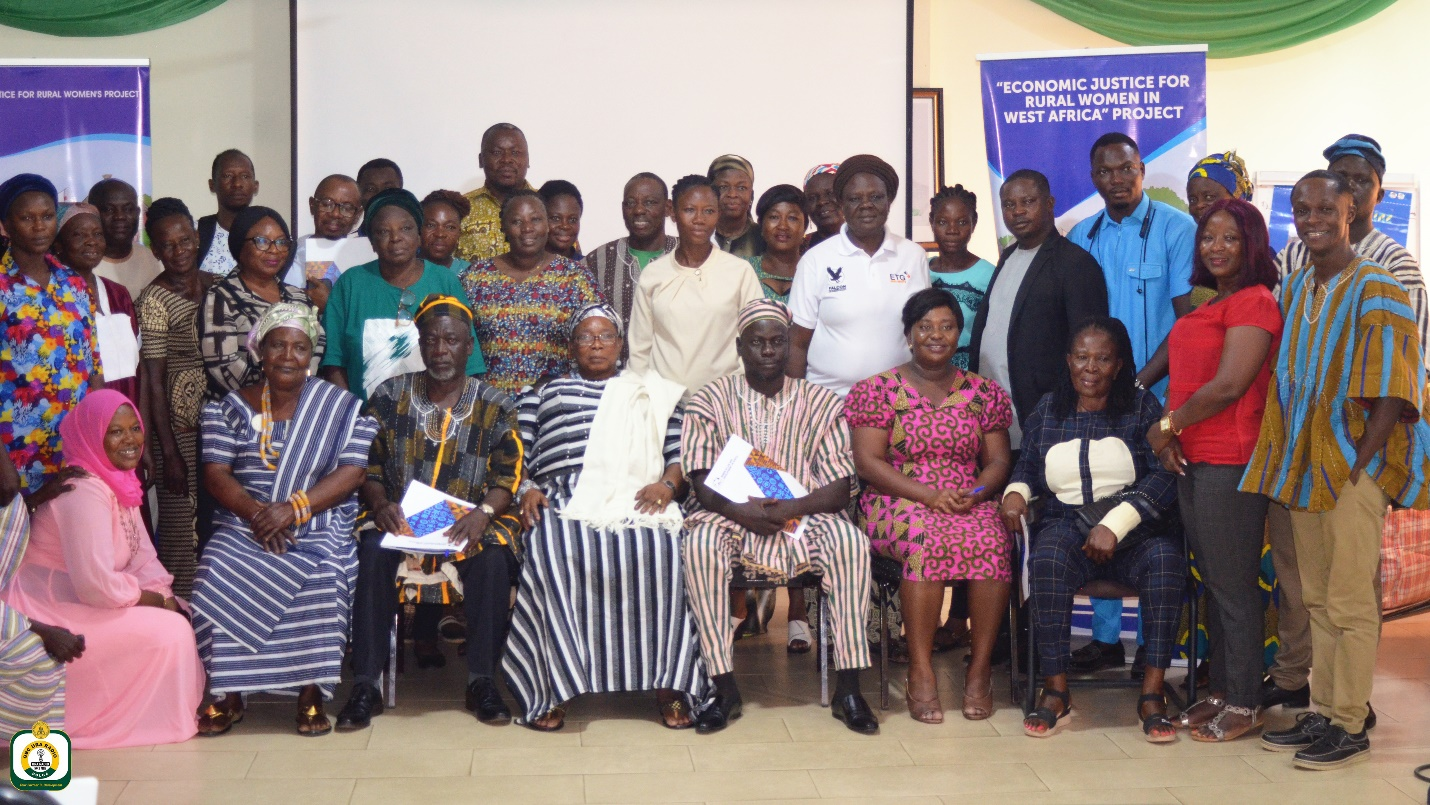
A multi-stakeholder dialogue was recently held at the In-Service Training Center in Bolgatanga in the Upper East Region of Ghana, bringing together government officials, traditional leaders, civil society organizations, and community members to discuss promoting women’s economic rights. The event, organized by Women in Law and Development in Africa (WiLDAF) under the theme “Policy Dialogue on Women’s Economic Rights”, highlighted the ongoing challenges women face in accessing resources and the legal frameworks available to protect their rights.
WiLDAF, a pan-African women’s organization, has been working since 1993 to advance the rights of women and girls through a rights-based approach that references Ghanaian law. Ms. Lois Aduamoah Addo, the organization’s Programme’s manager explained that WiLDAF’s five main program areas include:
- Women’s Access to Justice, which previously championed the passage of the Domestic Violence and Gender Equity Act.
- Women’s Participation in Decision Making, which contributed to framing the Affirmative Action and Gender Equity Act.
- Women’s Economic Empowerment, which focuses on women’s land and property rights, particularly in agriculture. WiLDAF made significant inputs to ensure the Land Act 2020 has gender-sensitive provisions.
- The Girls’ Empowerment Project, which educates young girls on gender, human rights, and their ability to speak out against violence and participate in decision-making.
- The Maternal and Reproductive Health Program, which informs rural women about free government healthcare services.
The dialogue underscored the disparity between national laws and entrenched cultural practices. Ms. Georgina Abresser-Aku, Acting Director of the Department of Children in Upper East, noted that socio-cultural norms in the region continue to limit women’s access to critical resources like land, credit, education, and agricultural inputs. She urged stakeholders to promote widespread awareness of legal rights and frameworks, emphasizing that laws must be “known, understood, and enforced at the grassroots level”. Ms. Abresser-Aku also called for gender-responsive budgeting at the local level to ensure that budgets reflect the needs and contributions of women, especially in agriculture.
Mr. Komla Morgan Lawe Esq, discussed how the Ghanaian constitution serves as the supreme law of the land, stating that any law or cultural practice inconsistent with it should be declared “non-evolving” and “prehistoric”. He cited several constitutional articles to support women’s economic rights: He educated the participants on some constitutional provisions such as Article 17 which prohibits discriminatory practices against any person based on gender. As Article 18 guarantees every person the right to own property, either individually or in association with others, without discrimination, Article 22 also ensures that a spouse is not deprived of a reasonable provision from the estate of their deceased partner.
He highlighted the challenges women face, particularly in polygamous marriages, where they are often marginalized in the distribution of marital property. The Land Act 2020 was presented as a “novel legislation” that has gender-sensitive provisions to protect women’s property rights, especially within marital unions.
Traditional leaders shared their perspectives on bridging the gap between law and custom. Naab Seivig Sobil IV, Chief of Pelungu, and Nasalima Yidaan-Tobig II, the Logre Chief, both recognized that customary laws can sometimes be discriminatory. Naab Seivig Sobil IV stated that he has prioritized women in his community by encouraging them to set up businesses and providing them with land and police protection to operate freely. He also called on district assemblies and the central government to support these initiatives. Nasalima Yidaan-Tobig II emphasized the role of traditional leaders in promoting awareness and eradicating cultural practices that act as barriers to women’s rights.
Hon. Elizabeth Alele, Queen Mother of Kubore, and Madam Gilberta Akuka, President of the Women in Agriculture Platform, spoke on behalf of the women farmers. They pleaded with district assemblies and other partners to see them as people who complement and not fight men. They also raised concerns about the high interest rates on bank loans and the lack of sustained support from the government after projects like WiLDAF’s conclude. They stressed the importance of men allowing their wives to attend meetings and the need for women to have the right to inherit property, including land and houses, from their parents and husbands.
The Bawku West District Assembly representative and a representative from the Ministry of Food and Agriculture (MoFA) outlined their commitments. The District Assembly plans to implement gender-responsive budgets, encourage women’s participation in local government, and collaborate with NGOs and the private sector to empower women through skills training and resource access. The MoFA representative, Madame Yakubu Sakiati, highlighted a special unit within the ministry dedicated to women’s empowerment, which provides training and formulates policies to support vulnerable groups, including women. They also mentioned a program to train female extension agents to advise women farmers in their communities.
Mr. Christian Hayford, a Gender Champion and consultant, concluded by highlighting the positive impact of men championing women’s access to land and resources. He noted that through training, men have come to understand their role in removing barriers and are now helping women and farming groups secure land, fertilizers, and other resources.
Hajia Jawharat Amadu, representing RISE-Ghana, explored rural women’s financial inclusion. She highlighted systemic barriers, including discriminatory customary laws and limited access to legal education and credit. She emphasized a collaborative, multi-stakeholder approach with government bodies, traditional leaders, and NGOs to create an enabling environment. Amadu added that this partnership would offer practical solutions like gender-responsive budgeting and financial literacy programs. Finally, she moderated a panel discussion with representatives from the Peasant Association of Ghana, Founde Rural Bank, and the Rural Women non-profit on promoting women’s financial inclusion in the Upper East region.