UE/R: SOCO PROJECT FACILITATORS URGED TO WORK HARD FOR THE SUCCESS OF THE PROJECT – DCE NABDAM
By Prosper Adankai
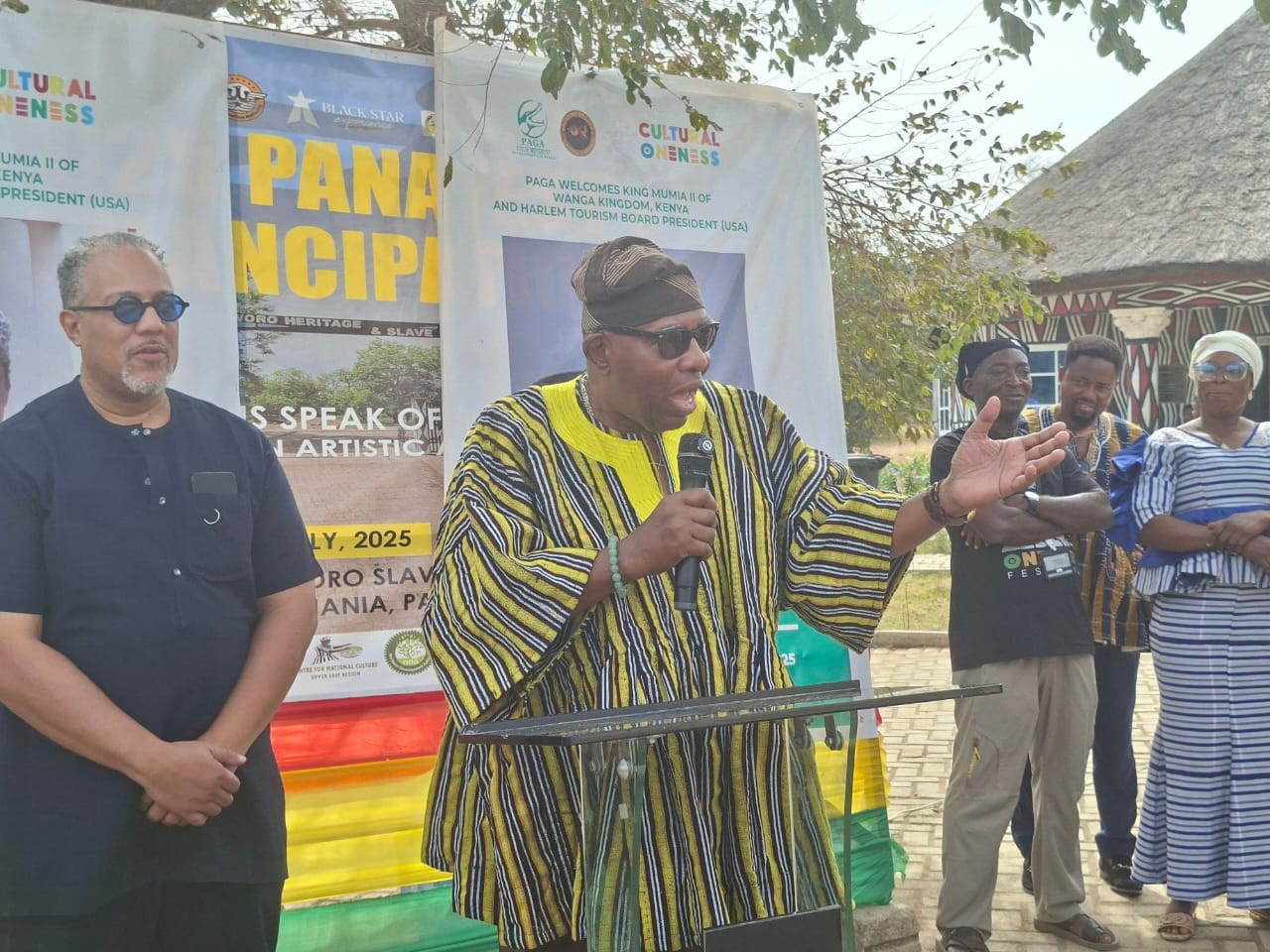
The President of the Harlem Tourism Board, Tony Rogers, has renewed the call for the African continent to unite toward the realisation of
Dr. Kwame Nkrumah’s long-held dream of a United States of Africa. Speaking during the Cultural Roots Tour—an international cultural
diplomacy initiative designed to reconnect Africans on the continent with descendants of the African diaspora—Mr. Rogers emphasized that
Nkrumah’s vision was far more than a political manifesto crafted in a post-independence era. Rather, he described it as a comprehensive
cultural and economic blueprint for strengthening African identity, protecting continental sovereignty, and elevating Africa’s global
standing in a world where geopolitical alliances increasingly determine influence and opportunity. His remarks added renewed energy
to contemporary Pan-African conversations that continue to gain momentum across Africa and the diaspora.
According to Mr. Rogers, the quest for unity is not simply a political aspiration left behind by early independence leaders but a living,
urgent call shaped by history and reaffirmed by the challenges and possibilities confronting Africa today. He noted that the Cultural
Roots Tour speaks directly to this aspiration, functioning as both a symbolic and practical journey that brings together communities,
leaders, thinkers, and descendants of African ancestry who seek to reconnect with their heritage. The tour is a collaborative effort
involving the Harlem Tourism Board, African traditional authorities, cultural organisations, and diaspora groups committed to healing historical divides, promoting cultural pride, and establishing partnerships that advance mutual understanding and development.
Accompanying Mr. Rogers on the tour is His Royal Majesty King Peter Mumia II of the Wanga Kingdom in Kenya. The presence of King Mumia II underscores the growing involvement of African traditional leaders in cultural diplomacy, tourism development, and Pan-African engagement. Traditional authorities—long regarded as custodians of history, culture, and identity—are increasingly emerging as important figures in international cultural exchanges and diaspora reconnection programmes. As part of the delegation, King Mumia II brings with him the historical stature of the Wanga Kingdom, one of Kenya’s most enduring monarchies, and a legacy that resonates strongly with the
cultural revitalisation goals of the tour.
The delegation’s visit to the Upper East Region of Ghana offers a compelling example of how tourism, heritage, and history can be harnessed to promote unity. Their first stop was the Palace of the Paga Pio, a significant traditional seat of leadership in the region.
At the palace, the team engaged in discussions centred on cultural continuity, the preservation of indigenous governance systems, and the shared responsibility of African communities—traditional and modern—to foster unity and development. The Paga Pio, known for his influence
and respected leadership, welcomed the delegation and offered insights into the role of traditional rulers in shaping social cohesion and
inter-ethnic cooperation. For the delegation, the visit provided a rare opportunity to witness living cultural heritage and to appreciate
the resilience of traditional authority even in the face of modernisation and social transformation.
From the palace, the delegation is scheduled to visit the Pikworo Slave Camp, one of West Africa’s earliest and most significant slave
transit points. Located in Paga, the camp served as one of the first holding and conditioning grounds where enslaved Africans were
confined, inspected, and prepared for forced marches to the slave markets of Salaga, and eventually, the coastal forts that served as
departure points for the trans-Atlantic slave trade. The site, now preserved as a memorial and educational centre, stands as a somber
reminder of a painful chapter in African history—a history that continues to shape relationships between Africa and its diaspora in
profound and emotional ways.
For Tony Rogers and the Cultural Roots Tour delegation, the visit to the Pikworo Slave Camp is deeply symbolic. It represents a journey of
remembrance, reflection, and healing. Rogers observed that the legacies of slavery, colonialism, and displacement left deep wounds on
the African world, fractures that can only be meaningfully addressed by reconnecting, acknowledging the past, and building bridges that
honour both suffering and resilience. He explained that many African Americans and other members of the diaspora feel a spiritual pull toward sites such as Pikworo because they offer tangible links to ancestors whose identities and histories were forcibly erased. Standing on the ground where their ancestors stood, suffered, and endured creates a powerful emotional and historical anchor—one that strengthens the desire to reconnect with the continent and to participate in Africa’s future.
In addition to its emotional significance, the tour carries economic and developmental implications. Heritage tourism has become an
increasingly important sector in Africa, capable of generating employment, encouraging cultural preservation, and creating new
opportunities for local communities. Rogers believes that by promoting heritage sites such as Pikworo and engaging traditional leaders as
partners in tourism development, African nations can create sustainable tourism models that empower communities while educating visitors about Africa’s rich and complex history. He added that the Harlem Tourism Board is committed to supporting such initiatives by fostering collaboration between African destinations and global tourism networks.
King Mumia II, reflecting on the tour, highlighted the importance of cultural exchange as a tool for unity. He noted that while Africa is a vast continent with diverse languages, customs, and traditions, its people share a common heritage and common aspirations. He stressed that traditional leaders have always played a central role in uniting communities, mediating conflicts, and preserving cultural values. In
the modern era, he believes they can continue to do so by forming alliances across borders, participating in cultural diplomacy, and promoting African identity on the global stage. He commended Ghana for its longstanding commitment to Pan-Africanism and for its efforts to
welcome the diaspora home through initiatives such as the Year of Return and Beyond the Return campaigns.
Throughout their engagements in the Upper East Region, the delegation emphasised the need for Africans everywhere—on the continent and
abroad—to see unity not as an abstract ideal but as a practical and necessary strategy for survival and advancement. Tony Rogers argued that Africa’s vast cultural wealth, youthful population, and abundant resources position the continent to be a global leader, but only if itacts collectively. Disunity, fragmentation, and internal conflict, he said, have historically weakened Africa’s influence, allowing external
powers to dominate economic, cultural, and political spaces that should have been shaped by Africans themselves. By contrast, a united
Africa—grounded in shared values, strengthened by cultural pride, and committed to mutual support—holds the potential to transform its place
in the world. The Cultural Roots Tour, now gaining traction as an annual movement, draws participants from across the diaspora who seek meaningful reconnection with Africa. It also offers opportunities for collaboration in areas such as cultural preservation, education, arts exchange, community development, and youth empowerment. Rogers noted that many young people in the diaspora are increasingly looking toward Africa for inspiration and belonging, and that initiatives like this tour help create pathways for them to participate more actively in
Africa’s cultural and economic development. He emphasized that these youth-focused efforts are vital, as the next generation will be responsible for carrying forward Nkrumah’s dream and ensuring that the idea of a united Africa continues to evolve.
As the delegation continues its journey through historical and cultural landmarks in northern Ghana, the message that echoes through
their engagements is one of solidarity, remembrance, and collective purpose. Whether standing in a royal palace, walking through a
historical site, or sharing stories with local communities, the delegation seeks to illustrate that unity begins with connection—one
conversation, one exchange, one moment of reflection at a time. Their presence in the Upper East Region is therefore not merely ceremonial but part of a growing movement that sees culture, history, and heritage as powerful tools for building the future.
In renewing the call for unity, Tony Rogers reminded Africans everywhere that the dream of a United States of Africa is not a relic
of history but a vision anchored in the lived experiences, struggles, and aspirations of African people. He believes that with continued
collaboration between traditional leaders, cultural institutions, governments, and the diaspora, Africa can build a future marked by
shared prosperity, dignity, and global influence. The Cultural Roots Tour, with its blend of heritage, leadership, and emotional reconnection, stands as a testament to what can be achieved when Africans unite across borders, cultures, and centuries.