UE/R: SOCO PROJECT FACILITATORS URGED TO WORK HARD FOR THE SUCCESS OF THE PROJECT – DCE NABDAM
By: Prosper Adankai
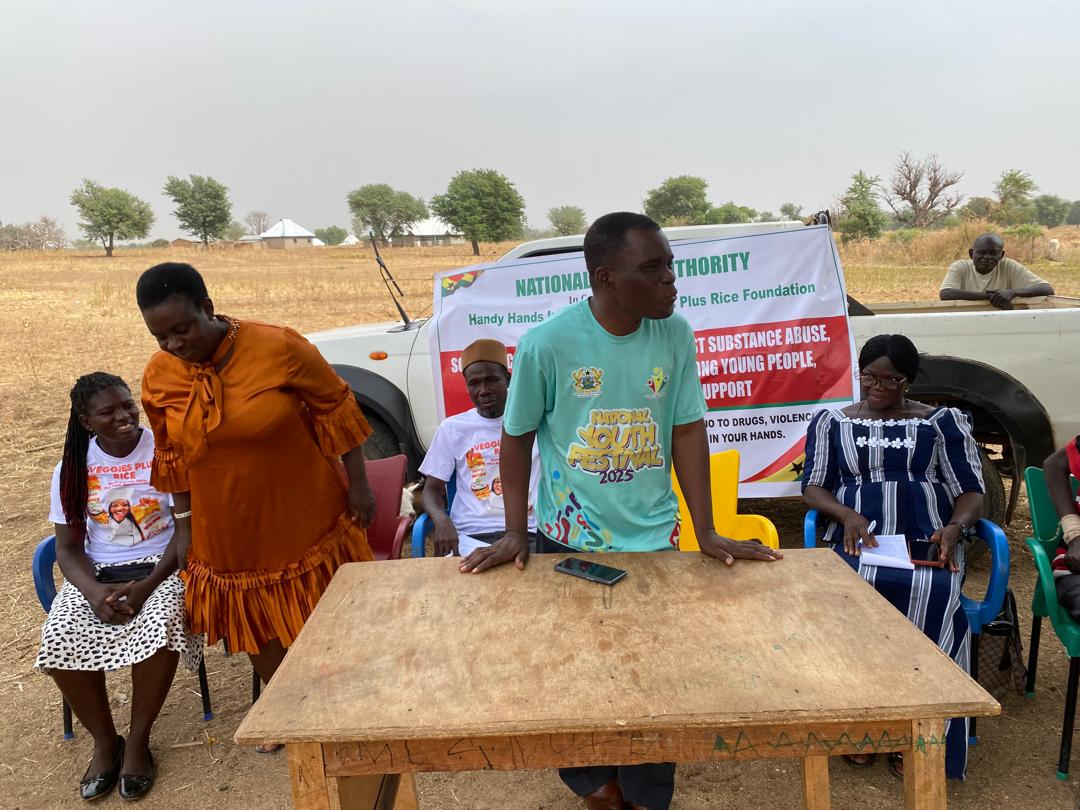
The National Youth Authority (NYA) in the Upper East Region has stepped up its campaign against substance abuse and violent behaviour
among young people with a sensitisation programme held at Balungu-Ganlagrum in the Bongo District. The engagement formed part of
the Ghana Against Drugs (GAD) – “Red Means Stop” campaign, a national initiative designed to confront the growing challenge of opioid and
substance abuse, particularly among the youth. The programme brought together young people, community leaders and opinion shapers to openly discuss the dangers of drug misuse and its direct link to rising incidents of violence, school dropout, unemployment and conflict within communities. Participants were sensitised on the health, social and economic consequences of drug abuse, as well as the long-term damage it causes to families and community cohesion.
In the Upper East Region, concerns about substance abuse among the youth have been steadily growing. Communities across the region have
reported increasing misuse of opioids and other illicit substances, especially among unemployed and out-of-school youth. The situation has been linked to risky behaviour, youth violence, declining productivity and, in some cases, involvement in crime. These realities have made
youth sensitisation a priority for the National Youth Authority and its partners. The “Red Means Stop” campaign adopts a holistic approach, using education, media advocacy and grassroots community engagement to reinforce a clear message: drug abuse is a dead end. By engaging youth directly in their own communities, the campaign seeks to empower them with accurate information, challenge peer pressure, and encourage positive lifestyle choices.
Speaking at the event, which also coincided with the donation of dual desks to the Balungu-Ganlagrum D/A Primary School, the Upper East
Regional Director of the National Youth Authority, Mr Francis Takyi-Koranteng, underscored the urgency of addressing substance abuse
in the region. He noted that the Upper East, like many parts of northern Ghana, is facing the combined pressures of youth unemployment, migration, poverty and exposure to illicit substances, making young people particularly vulnerable. Mr Takyi-Koranteng stressed that drug abuse is not only a health issue but a development challenge that threatens the future of the region. According to him, the misuse of opioids and other substances is gradually eroding the human capital needed to drive local development, weakening families and undermining community safety. “The reality on the ground is clear,” he said. “When young people fall into drug abuse, it affects their education, their ability to work,
and their relationships. It fuels violence, destroys dreams and places an extra burden on families and communities that are already
struggling.”
He emphasised that the fight against substance abuse cannot be left to law enforcement alone, but requires sustained education, strong
collaboration among institutions, traditional authorities and parents, and deliberate investment in youth development programmes. He
encouraged young people to take personal responsibility for their choices, reminding them that every decision they make today will shape
their future and the future.