UE/R: SOCO PROJECT FACILITATORS URGED TO WORK HARD FOR THE SUCCESS OF THE PROJECT – DCE NABDAM
BY: PROSPER ADANKAI
The Dunseema Festival has firmly established itself as one of the most vibrant and meaningful cultural celebrations in Ghana’s Upper East Region. Held annually on December 31st in Kandiga, a historic Gurune-speaking community in the Kassena-Nankana West District, the festival brings together tradition, youth energy, and community development under one cultural canopy. The 2025 edition, themed “Youth, Culture, and Community: The Spirit of Dunseema,” powerfully reaffirmed Kandiga’s place as a centre of living heritage and grassroots cultural tourism.
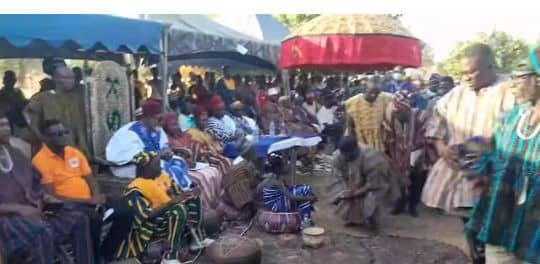
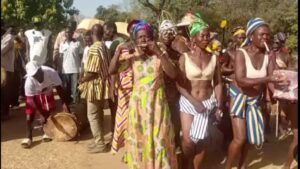
This year’s celebration opened with a majestic procession that underscored the authority and unity of traditional leadership in the area. The arrival of the Kandiga Naba, Mirigu Naba, Natugnia Naba, and other chiefs, including Pelungu, Logre and Sirigu Chiefs accompanied by their elders, transformed the Kandiga Dunseema Arena at the Timpiam Grounds into a sacred cultural space. Drumming, regalia, and solemn dignity marked their entry, reminding all present that chieftaincy in Kandiga is not ceremonial pageantry but a living institution rooted in history, land stewardship, and ancestral trust.
Welcoming participants to the festival, Naba Henry Abawine Amenga-Etego II, the Chief of Kandiga, expressed gratitude to all who had travelled from near and far to honour the community. In his address, he emphasized that Dunseema is not only a celebration of culture but also a call to action. He appealed to philanthropists, development partners, and organizations to champion development initiatives in Kandiga and surrounding communities, stressing that cultural preservation must go hand in hand with social and economic progress.
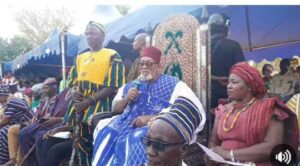
The festival’s broader vision was echoed by Prosper Adankai a member of Regional Organising Committee on behalf of Sabinus Chiravira, Team Lead of Spotless Event Planners. He described Dunseema as more than an event, calling it a philosophy and a promise.
According to him, Kandiga represents resilience, discipline, survival, and leadership—values forged on the savanna grasslands and passed down through generations. What unfolds at Dunseema, he noted, is lived history rather than staged performance, making the festival a powerful platform for heritage preservation and identity affirmation. A key highlight of the 2025 edition was the growing recognition of Dunseema as an advocacy and tourism-driven initiative.
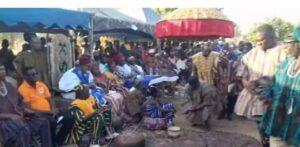
The team lead stressed that advocacy is a process rooted in presence and inclusion, adding that Dunseema proves tourism can begin at the grassroots and still achieve national and international relevance. By centering Kandiga’s narrative, the festival allows the community to tell its own story, host the world, and directly benefit from its cultural wealth.
The commitment to sustaining and expanding the festival was further strengthened by the Co-Chair of the Dunseema Festival, Gabriel Agambila, founder of the Alamgumbe Group. In his remarks, he pledged support for the traditional wrestling competition—Dunkiima—with the aim of making it marketable on the global stage. His pledge reflects a growing ambition to position indigenous sports as cultural assets capable of attracting international attention while preserving their original values of discipline, honour, and sportsmanship.
Dunseema 2025 also received strong support from political leadership, underscoring the festival’s importance beyond the cultural sphere. The Member of Parliament for Chiana-Paga, Nikyema Billa Alamzy, arrived at the festival grounds to a warm reception and donated GH₵5,000 towards the success of the event. His contribution was widely applauded as a demonstration of solidarity with the people of Kandiga and recognition of culture as a driver of development. Similarly, the District Chief Executive for Kassena-Nankana West, Stephen Akurugu, donated GH₵2,000 on behalf of the Upper East Regional Minister and an additional GH₵2,000 on his own behalf. These gestures reinforced the message that traditional institutions, local government, and political leadership can collaborate meaningfully to support cultural initiatives that strengthen community cohesion and local economies. Throughout the day, swimming competition was the curtain raiser followed by cultural performances animated the arena—traditional music, war dances, storytelling, hunting displays, horse dancing, and indigenous rhythms served as tools of education and memory. Youth participation remained central, with young people leading performances, engaging in wrestling bouts, and receiving recognition as custodians of Kandiga’s future. The festival consistently emphasized that cultural transmission is most effective when youth are not spectators but active participants.
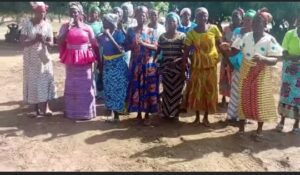
The Dunseema Festival is, at its heart, a celebration of Gurune identity and community pride. It fosters unity among residents and members of the Kandiga diaspora, reconnecting families and reaffirming shared values. Beyond celebration, it provides space for dialogue on peace, youth empowerment, heritage preservation, and development aspirations. As the drums gradually fell silent and the festival transitioned into evening celebrations, one message remained clear: Dunseema is no longer just an annual gathering. It is a movement, a cultural statement, and a bridge between the past and the future.
With sustained community commitment, traditional leadership, youth involvement, and institutional support, the spirit of Dunseema continues to unite Kandiga in peace, purpose, and pride—carrying its story from the Upper East Region to the wider world.