UE/R: SOCO PROJECT FACILITATORS URGED TO WORK HARD FOR THE SUCCESS OF THE PROJECT – DCE NABDAM
y: Prosper Adankai
Among the Gurene-speaking people of Northern Ghana, architecture is far more than shelter; it is a living expression of identity, social order, and communal values. Our houses are central to daily life and reflect, to a large extent, the complex configuration of socioeconomic relations and ethnic diversity that characterizes our territory. Built with deep respect for the land, climate, and social structure, traditional Gurene architecture embodies generations of indigenous knowledge, craftsmanship, and cultural continuity.
At the heart of Gurene domestic life is the compound house. These compounds are carefully organized systems rather than random collections of rooms. Several round or rectangular rooms are arranged around a central community courtyard, forming an enclosed space that is protected by a surrounding wall with a single main entrance. This layout is not accidental; it mirrors the social structure of the family and reinforces unity, cooperation, and shared responsibility. The courtyard serves as the nucleus of daily life, a place where household members cook, work, interact, and perform rituals. It is here that children play, elders converse, and families gather at the end of the day.
The single entry point into the compound is both practical and symbolic. Practically, it provides security, helping to control access to the household and protect livestock and family members. Symbolically, it marks the boundary between the private world of the family and the wider community. Crossing this threshold is an act of respect, and visitors are often received with courtesy and deliberation, reflecting the Gurene values of hospitality and order.
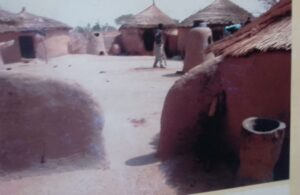
Just outside the entrance, one finds one of the most important elements in Gurene social relations: the porch. The porch, usually roofed and slightly elevated, is the prime venue for the men of the house and their visitors. It functions as a social and political space where discussions take place, disputes are settled, and communal decisions are shaped. Elders sit here to receive guests, exchange news, and pass on wisdom to younger generations. The porch is also a space of observation, allowing the household head to remain connected to village life while maintaining authority and dignity.
In the frontage of the house, it is common to see the landlord seated quietly, contemplating the day’s work. This image captures the philosophical relationship between the Gurene man and his home. Sitting at the front is not merely a posture of rest; it is a moment of reflection, accountability, and presence. From this vantage point, the landlord observes the compound, the community path, and the rhythms of village life, embodying responsibility for both household and heritage.
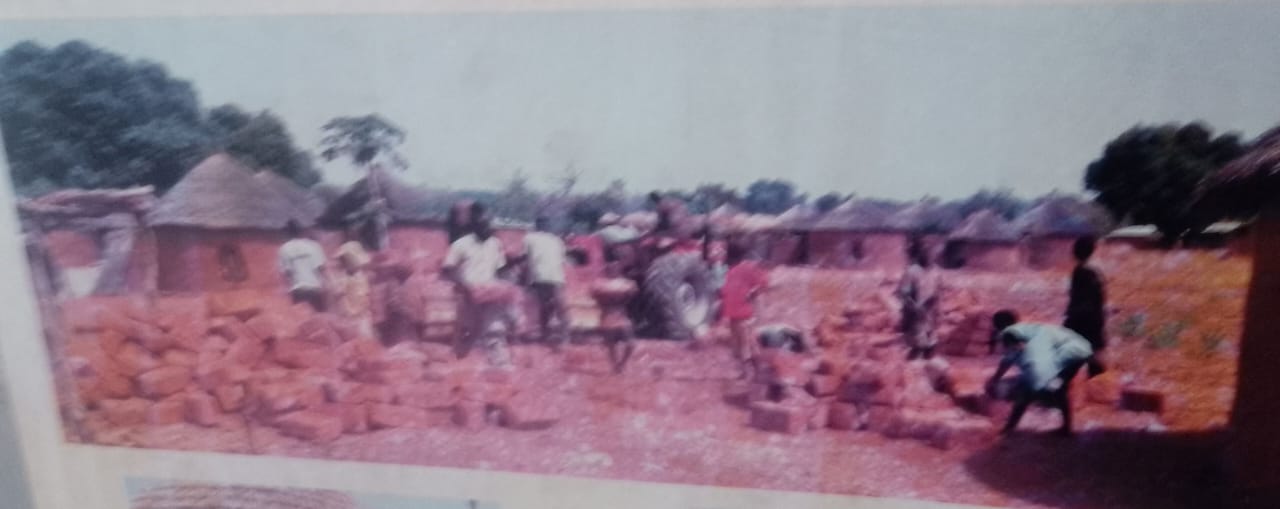
The construction of Gurene houses is itself a deeply social process. Building is a communal activity involving friends, neighbours, and relatives, usually taking place after the rainy season when farming demands are reduced and materials are readily available. No single person builds alone. The collective labour strengthens social bonds, reinforces mutual dependence, and ensures that knowledge of construction techniques is passed from one generation to the next. Women, men, and youth all play specific roles, from fetching water and mud to moulding bricks and thatching roofs.
Traditional Gurene architecture relies almost entirely on natural materials found nearby. Walls are constructed using mud bricks shaped by hand and dried under the sun. These bricks are strong, affordable, and well-suited to the local climate, keeping interiors cool during the intense heat of the dry season and warm during cooler nights. After construction, the walls are plastered with a mixture of mud, water, and shea oil waste. This mixture not only smooths and beautifies the walls but also enhances durability and resistance to rain. The distinctive earthy tones of these surfaces blend harmoniously with the surrounding landscape, reinforcing the Gurene philosophy of living in balance with nature.
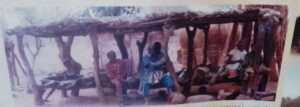
Roofs are traditionally made from weaved plant elements such as grass and millet stalks. Thatching is an art form that requires skill and patience, ensuring that rainwater runs off efficiently while providing insulation from heat. These roofs, though requiring periodic maintenance, are environmentally sustainable and locally sourced. The materials decompose naturally over time, returning to the earth without causing harm, a reflection of indigenous ecological wisdom long before the concept of sustainability became globally recognized.
Beyond their physical form, Gurene houses carry deep cultural meaning. Each room has a specific function—sleeping quarters, storage spaces, kitchens, or shrines for ancestral worship. Sacred areas within the compound remind occupants of their spiritual obligations and ancestral connections. The house, therefore, becomes a repository of memory, belief, and identity, linking the living to those who came before them.
In recent times, however, traditional architecture among the Gurene-speaking people has begun to evolve. New industrial materials such as cement blocks and zinc roofing sheets, typical of urban areas, are increasingly finding their way into rural communities. Many people associate these materials with comfort, aesthetic beauty, wealth, and modernity. Zinc roofs, for example, are valued for their durability and reduced maintenance, while cement blocks are seen as symbols of progress and permanence.
This transition reflects broader socioeconomic changes, including urbanization, migration, and exposure to modern lifestyles. While these new materials offer certain advantages, they also present challenges. Zinc roofs can make houses extremely hot during the dry season, and cement construction often lacks the climatic adaptability of traditional mud architecture. More importantly, the shift risks eroding communal building practices and the cultural meanings embedded in traditional design.
Yet, traditional Gurene architecture has shown resilience. In many communities, people now blend old and new, combining cement foundations with mud walls, or zinc roofs with traditional compound layouts. This hybrid approach reflects the dynamic nature of culture—adapting without completely abandoning the past. It demonstrates that Gurene architecture is not static but responsive, capable of absorbing change while retaining its core values.
Ultimately, the traditional architecture of the Gurene-speaking people stands as a powerful testament to communal life, environmental harmony, and cultural continuity. From the central courtyard to the welcoming porch, from the mud-plastered walls to the landlord seated thoughtfully at the frontage, every element tells a story of belonging and purpose. As modern influences continue to shape the landscape, preserving and valuing these architectural traditions remains essential—not only as heritage, but as living knowledge that continues to offer lessons in sustainability, cooperation, and identity for future generations.