UE/R: SOCO PROJECT FACILITATORS URGED TO WORK HARD FOR THE SUCCESS OF THE PROJECT – DCE NABDAM
BY: Gladys Apuweni
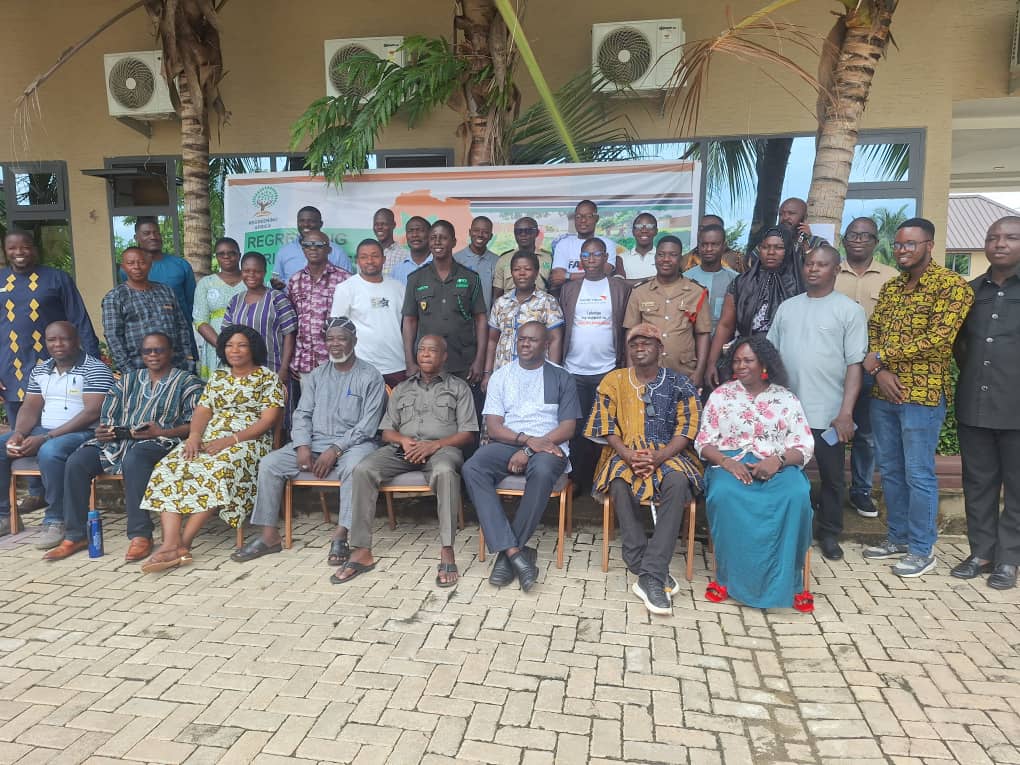
The fight against climate change in northern Ghana has received a new boost as the Re-Greening Africa Project launches its second phase, bringing together communities, government agencies, and development partners to restore degraded lands and build sustainable livelihoods.
Speaking at the inception two days workshop in Bolgatanga, Mr. Richard Kofi Appoh, Project Manager for Re-Greening Africa at World Vision Ghana, explained that the initiative seeks to expand on the successes chalked in its first phase. “In phase one, we introduced more than 40,000 households to re-greening practices and put about 50 hectares of land under restoration,” he said.
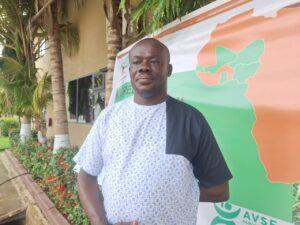
The project’s approach emphasizes Farmer-Managed Natural Regeneration (FMNR), a method of nurturing already existing tree stumps and seedlings to grow stronger, as they are naturally better adapted to the harsh conditions of the region. “We are not only protecting and planting trees but also supporting households with livelihood interventions,” Mr. Appoh stressed. “We can not just tell people to plant trees without helping them find ways to survive. That’s why we are also promoting value chains for crops like shea, baobab, and dawadawa, as well as activities like beekeeping.”
Funded by the European Union with €2 million, the project is being implemented in two regions of Ghana, Upper East and Northern Region, covering districts such as Bawku, Bawku West, Binduri, Tempani, Garu, Yendi, and Mion. “Our focus is to halt the advance of the Sahel and Sudan savanna,” Mr. Appoh emphasized. “If we do nothing, these landscapes will be lost.”
Highlighting the urgency of the intervention, Upper East Regional Director of Agriculture, Alhaji Zakaria Fuseini, warned that climate change is already severely affecting farming in the region. “Nobody should tell us that climate change has caught up with us. We are feeling it, especially here in the Upper East,” he said.
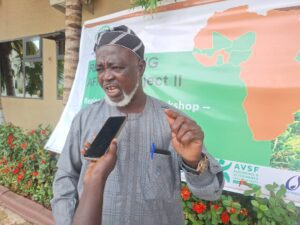
According to him, erratic rainfall, lack of dry season irrigation facilities, and degraded soils have made agriculture increasingly difficult. “Our predecessors farmed without fertilizer because the land was fertile, but today, environmental degradation has destroyed that balance. Re-Greening Africa is bringing back opportunities for us to restore our lands and improve productivity. This is not just for farmers. It’s a collective responsibility,” Alhaji Fuseini noted.
His sentiments were echoed by Mr. Mark Aidoo Gyamfi, Deputy Regional Forestry Manager, who underscored the challenges of protecting forest reserves. “We have 28 forest reserves in the Upper East Region, but most of them have been degraded due to human activities,” he revealed. Tree planting efforts often face low survival rates because of bushfires, overgrazing, and illegal farming.“What we need most is to win the people to our side,” he emphasized. “If communities understand the need to protect and nurture trees, half of the battle is won. The other half depends on weather conditions and selecting species that can withstand harsh climates.”
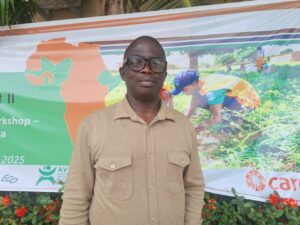
Mr. Gyamfi also pointed out the growing challenge of wildlife human conflict, especially with elephants. “Elephants are invading farms more frequently now because their habitats have been destroyed. About 70% of these farms are illegal encroachments in forest reserves. This is why re-greening is important to restore habitats, reduce conflicts, and sustain both human and wildlife livelihoods.”
The project is also introducing alternative income-generating opportunities like beekeeping, which has already proved successful in other parts of Ghana. “When communities take up beekeeping, it not only provides honey for local and industrial use but also discourages indiscriminate bushfires,” he explained.
The Re-Greening Africa Project, implemented by World Vision Ghana and Catholic Relief Services under the coordination of ICRAF, is expected to run until 2028. Its goal is not only to restore degraded landscapes but also to embed sustainable practices in communities long after donor support ends.
As Mr. Appoh concluded: “Re-greening is not just about planting trees. It is about giving people hope, protecting our future, and ensuring that generations to come can still depend on the land for life and livelihood.”